
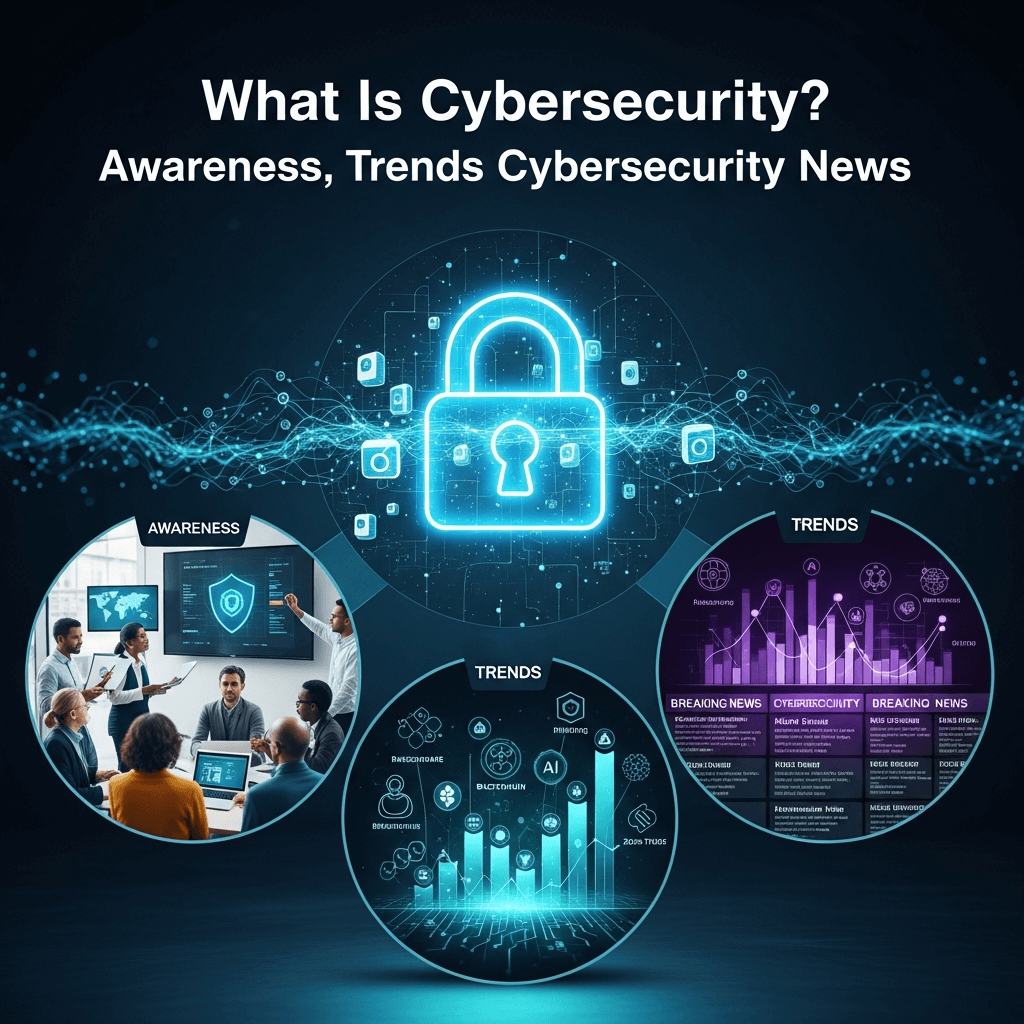
Summary
- Cybersecurity is no longer just an IT problem; it is a global economic imperative, with cybercrime costs projected to hit $10.5 trillion annually by 2025.
- The core of effective defense lies in the CIA triad: Confidentiality, Integrity, and Availability.
- Human error remains the weak link, contributing to 68% of all data breaches, making cybersecurity awareness a critical skill for every employee.
- Top trends for 2025 include AI-driven attacks, the rise of “Ransomware-as-a-Service,” and stricter regulatory compliance like the SEC’s new disclosure rules.
- Recent headlines, such as the massive “Mother of All Breaches” (MOAB) and the AT&T leak, underscore the urgency for robust, multi-layered security strategies.
Introduction
Here is a staggering number to chew on: according to Cybersecurity Ventures (2025), global cybercrime costs are expected to reach a jaw-dropping $10.5 trillion annually by 2025. To put that in perspective, if cybercrime were a country, it would have the third-largest economy in the world, trailing only the U.S. and China.
It’s easy to tune out the noise when every other headline screams “HACKED.” But for businesses and IT professionals, the stakes are real. Cybersecurity is the practice of defending computers, servers, mobile devices, electronic systems, networks, and data from malicious attacks. It isn’t about setting up a firewall and walking away; it’s a living, breathing discipline that requires constant vigilance against an adversary that never sleeps.
What Is Cybersecurity? The Core Pillars
At its heart, security is about control—controlling who accesses what and when. While the tools change (from simple antivirus in the 90s to AI-driven threat hunting today), the foundational goal remains the same. Professionals often refer to this as the CIA Triad. No, not the spies—though they probably use it too.
The CIA Triad
- Confidentiality: keeping secrets secret. This ensures that sensitive information—like credit card numbers or trade secrets—is accessible only to those authorized to see it.
- Integrity: ensuring data hasn’t been tampered with. If you send an email saying “Pay $100,” and a hacker changes it to “Pay $10,000,” integrity has been lost.
- Availability: ensuring systems work when you need them. A Ransomware attack that locks up your servers is a direct attack on availability.
Why the “It Won’t Happen to Me” Mindset fails
Many small business owners assume hackers only target the big fish like Microsoft or Google. The reality? Automaton doesn’t care about your revenue size. Automated bots scan the internet 24/7 looking for open doors. If you have an unlocked digital window, they will climb through it.
Why Cybersecurity Awareness Is Non-Negotiable
We can build the strongest digital fortresses in the world, but if someone on the inside opens the gate, it’s game over. This is the “human element” of security.
According to the Verizon Data Breach Investigations Report (2024), the human element is involved in 68% of breaches. This includes everything from falling for a phishing email to using “Password123” as a login.
Phishing and Social Engineering
Phishing remains the king of entry points. It’s cheap, easy, and effective. Modern social engineering isn’t just a Nigerian Prince asking for a wire transfer. It’s a text message that looks exactly like an Amazon delivery notification or an email from your “CEO” asking for a quick favor.
Cybersecurity awareness isn’t about making everyone an IT expert. It’s about training employees to pause before they click. A healthy dose of skepticism is your best firewall.

Top Trends Shaping the Cybersecurity Landscape
As we move through 2025, the battlefield is shifting. Attackers are getting smarter, but so are the defenders. Here is what is dominating the industry conversations.
Defensive AI vs. Offensive AI
Artificial Intelligence is a double-edged sword. On one side, security teams use AI to detect anomalies faster than any human could. On the other, hackers use AI to write better malware and craft convincing deepfake voice messages to trick finance teams into transferring money.
Ransomware-as-a-Service (RaaS)
Ransomware has gone corporate. Cybercriminal gangs now operate like legitimate software companies. They rent out their ransomware code to “affiliates” (less skilled hackers) in exchange for a cut of the profits. This lowers the barrier to entry, meaning almost anyone with bad intentions can launch a devastating attack.
Zero Trust Architecture
The old model was “trust but verify.” The new model is “never trust, always verify.” In a Zero Trust environment, the network assumes everyone—even the CEO logging in from the office—is a potential threat until proven otherwise. Every request for access is authenticated, authorized, and encrypted.
Latest Cybersecurity News & Major Breaches
Keeping up with cybersecurity news is vital because today’s breach tells you how to defend against tomorrow’s attack. The last year has been particularly noisy.
The “Mother of All Breaches” (MOAB)
In early 2024, researchers discovered a massive dataset containing 26 billion records leaked from sites like LinkedIn, Twitter, and Weibo. While much of this was repackaged data from previous hacks, the sheer scale forces organizations to assume that some of their user credentials are compromised.
The National Public Data Leak
In a staggering privacy failure, a background check company called National Public Data (NPD) reportedly leaked the Social Security numbers and addresses of nearly 3 billion people (effectively covering the entire data history of millions of US, UK, and Canadian citizens). This incident highlights the risks associated with third-party data aggregators who hold massive amounts of data with varying levels of security.
Regulatory Crackdowns
Governments are stepping in. The SEC (Securities and Exchange Commission) now requires publicly traded companies to disclose material cybersecurity incidents within four business days. Similarly, the EU’s NIS2 Directive is enforcing stricter security requirements across essential industries. The message is clear: if you hide a breach, you will pay for it.
Practical Steps for Better Security
You don’t need a million-dollar budget to improve your posture. Most attacks succeed because basics were ignored.
- Enable MFA (Multi-Factor Authentication): This single step stops 99.9% of automated account takeover attacks.
- Patch Your Stuff: Update your operating systems and apps. Those annoying “update available” pop-ups are often patching critical holes.
- Backups: Keep offline backups. If ransomware hits, you can wipe the system and restore without paying a dime.
- Limit Access: Does the intern really need administrative access to the entire server? Probably not.
Conclusion
Cybersecurity is a race with no finish line. The threats evolve, the technology advances, and the bad guys only need to be right once while defenders need to be right every single time. However, by staying informed on the latest cybersecurity news and fostering a culture of cybersecurity awareness, you turn your employees from liabilities into your first line of defense.
Don’t wait for a breach to take this seriously. Review your security hygiene today—check your backups, turn on MFA, and remind your team that if an email looks too good to be true, it probably is.