
Summary
- Foundation of Modern Tech: A semiconductor is a material with electrical conductivity between a conductor (like copper) and an insulator (like glass), enabling the precise control of current central to virtually all modern electronics.
- Essential Hardware: The most crucial semiconductor hardware is the integrated circuit (IC), commonly known as the microchip, which contains billions of transistors to execute logic and memory functions.
- Ubiquitous Uses: Semiconductors are no only found in computers and phones but are critical components in automotive systems, industrial automation, medical devices, and renewable energy infrastructure.
- Global Industry: The semiconductor industry is a complex global ecosystem dominated by three business models: Integrated Device Manufacturers (IDMs), Fabless companies, and Foundries with revenue projected to exceed $600 billion in 2024 (Statista, 2024).
- Future Growth: AI, 5G/6G communication, and the Internet of Things (IoT) are driving massive demand, requiring continuous innovation in materials science and fabrication techniques.
Introduction
If you are reading this on a phone, laptop, or tablet, you are staring at a device powered by a semiconductor. These unassuming materials are the bedrock of the digital revolution, acting as the fundamental switches and memory cells that bring every piece of modern technology to life. They are what allow electricity to be manipulated with surgical precision, translating simple on/off signals into the complex processes we rely on daily.
The sheer scale of this industry is staggering. According to Statista (2024), the global semiconductor market is forecasted to reach approximately $611 billion in revenue in 2024. This massive valuation reflects not only their ubiquity but their strategic importance; no other material is more central to geopolitical stability and economic growth today. Understanding what they are and how they work is key to grasping the future of technology.
This article will delve into the physics behind a semiconductor, break down the core hardware it creates, explore its diverse applications, and provide an overview of the colossal industry that designs and manufactures these indispensable components.
The Core Science: What is a Semiconductor?
A semiconductor is defined by its intermediate electrical properties. Unlike a conductor, which allows current to flow freely, or an insulator, which blocks it, a semiconductor’s ability to conduct electricity can be precisely controlled. This unique characteristic is what makes it so valuable.
The Dance of Electrons and Holes
The magic happens at the atomic level, typically in crystalline materials like silicon. In its pure state, silicon has four valence electrons, forming strong covalent bonds that prevent free movement of charge. This makes it an insulator.
However, the material can be “doped” by introducing impurities a process that creates either an excess or a deficit of electrons:
- N-Type (Negative): Doping with an element like phosphorus, which has five valence electrons, introduces free electrons into the crystal structure. These free electrons become the primary charge carriers.
- P-Type (Positive): Doping with an element like boron, which has only three valence electrons, creates “holes” (a deficit of an electron) in the crystal lattice. These holes act as positive charge carriers, as electrons from adjacent atoms can jump to fill the hole, effectively making the hole appear to move.
The critical piece of semiconductor hardware is the P-N junction, formed by joining N-type and P-type materials. When voltage is applied, this junction acts as a diode, allowing current to flow in only one direction. This ability to control current flow is the genesis of all digital logic.
The Transistor: The Fundamental Switch
The transistor is the most fundamental and celebrated invention derived from semiconductors. Essentially, it is an electronic switch or gate that can regulate the flow of current.
Imagine a water faucet: the P-N junction acts as a check valve, letting water flow one way. The transistor, on the other hand, is the control knob. A small electrical signal applied to its “gate” terminal can open or close the circuit between its “source” and “drain” terminals.
There are billions of these tiny switches known as MOSFETs (Metal-Oxide-Semiconductor Field-Effect Transistors) etched onto a single silicon chip. They are the building blocks of all logic.
Semiconductor Hardware: From Material to Microchip
The term semiconductor hardware refers to the finished electronic components—chips, diodes, and sensors created using the base materials. The most recognizable and important piece of this hardware is the integrated circuit or IC.
Integrated Circuits (ICs) and Their Varieties
An integrated circuit is a miniaturized electronic circuit built onto a single piece of semiconductor material. The sheer density of components is what makes modern computing possible. Think of the most powerful processor today; it might contain over 100 billion transistors, all working in concert.
The most common types of ICs include:
- Logic Chips (CPUs/GPUs): These are the ‘brains’ that execute instructions and perform calculations. The Central Processing Unit (CPU) handles general-purpose tasks, while the Graphics Processing Unit (GPU) specializes in parallel processing, crucial for graphics rendering and AI model training.
- Memory Chips (RAM/Flash): These store data. Random Access Memory (RAM) is fast, volatile memory used for active programs, while Flash/NAND memory is non-volatile, storing data even when the power is off (used in SSDs and smartphones).
- Analog/Mixed-Signal Chips: These translate real-world analog signals (like temperature, sound, or pressure) into digital data that a computer can understand, and vice-versa. Power management chips also fall into this category.
- System-on-a-Chip (SoC): A complete electronic system integrated into a single IC. Your smartphone uses an SoC that combines the CPU, GPU, memory controller, and wireless modem onto one chip for efficiency.
The Fabrication Challenge
The production of these ICs is an astonishing feat of engineering and materials science called photolithography. It involves creating ultra-fine patterns on a silicon wafer using light (often extreme ultraviolet, or EUV).
- Wafer Preparation: High-purity silicon is grown into a single crystal ingot and sliced into thin wafers.
- Doping and Layering: The wafer is selectively doped to create P and N regions. Hundreds of layers of materials are then deposited and etched.
- Patterning: Masks containing the circuit design are exposed onto a photoresist coating on the wafer.
- Etching and Cleaning: Unwanted material is etched away, leaving behind the circuit patterns. This cycle is repeated dozens of times to build up the intricate, multi-layered structure of the chip.
The scale is microscopic: modern process nodes are measured in nanometers (nm). At 3nm or 5nm, the fabrication process is so complex and expensive that only a few companies globally can achieve it. This high barrier to entry has shaped the current global industry structure.
Global Applications of Semiconductors
The uses of semiconductors have long extended beyond the traditional personal computer. Today, they are pervasive, driving nearly every major technological trend.
The Automotive Revolution
The modern car is a computer on wheels. Semiconductors are no longer only required for the infotainment system; they are essential for safety and performance.
- Advanced Driver-Assistance Systems (ADAS): Radar, Lidar, and camera sensor chips enable features like adaptive cruise control and automatic emergency braking.
- Electric Vehicles (EVs): High-power semiconductors, often made from materials like Silicon Carbide (SiC) or Gallium Nitride (GaN), are critical for efficient power inversion, charging, and battery management.
- Engine/Powertrain Control: Microcontrollers optimize fuel consumption and manage emissions.
Industrial and Infrastructure Backbone
The Industrial Internet of Things (IIoT) relies entirely on smart, connected devices.
- Automation: Factory robots, programmable logic controllers (PLCs), and machine vision systems depend on rugged, reliable microprocessors.
- Renewable Energy: Power semiconductors are used in solar inverters and wind turbine control systems to convert and manage the flow of power onto the grid efficiently.
- Telecommunications: 5G and future 6G networks use high-frequency RF chips and specialized processors in base stations and fiber optic systems to handle massive amounts of data at low latency.
AI and High-Performance Computing
The rise of Generative AI has created a new, insatiable demand for powerful, specialized semiconductor hardware.
- AI Accelerators: GPUs and custom ASICs (Application-Specific Integrated Circuits) are designed specifically to handle the parallel matrix multiplications required for training and running large AI models. This is perhaps the most significant growth driver in the industry today.
- Data Centers: Hyper-scale cloud data centers, which host the world’s digital services, are filled with thousands of servers running the latest and most efficient logic and memory chips.
The Semiconductor Industry Overview
The structure of the semiconductors industry is highly specialized, complex, and globalized, leading to the intricate supply chain challenges that have captured headlines in recent years.
The Three Business Models
The industry can be divided into three primary types of companies that interact in a competitive yet co-dependent ecosystem:
- Integrated Device Manufacturers (IDMs): These companies handle the entire process: they design, manufacture (only within their own fabrication plants or “fabs”), and sell their chips. Examples include Intel and Samsung. This is the traditional model, requiring massive capital investment.
- Fabless Companies: These companies specialize solely in the design and marketing of their chips, outsourcing all manufacturing. They leverage the latest process technology without the burden of building and running a costly fab. Examples include Qualcomm, Nvidia, and Broadcom.
- Foundries (Fabs): These companies operate the manufacturing facilities and are contracted by the Fabless companies to produce their designs. They are the ‘manufacturers-for-hire’ and are crucial to the modern supply chain. Taiwan Semiconductor Manufacturing Company (TSMC) and Samsung Foundry are the largest players.
| Company Type | Role | Key Asset | Examples |
| IDM | Design, Manufacture, Sell | Intellectual Property & Fabs | Intel, Texas Instruments |
| Fabless | Design and Sell | Intellectual Property & Design Team | Nvidia, Qualcomm |
| Foundry | Manufacture Only | State-of-the-Art Fabs | TSMC, GlobalFoundries |
Supply Chain and Geopolitical Factors
The sheer cost of establishing a cutting-edge fabrication plant often exceeding $20 billion means that advanced manufacturing is concentrated in a few key geographies, notably Taiwan, South Korea, and the US.
- Specialization: Foundries like TSMC have achieved nearly a monopoly on producing the smallest, most advanced chips for leading Fabless firms. This concentration of advanced manufacturing creates strategic vulnerabilities.
- Geopolitics: Governments worldwide now recognize the semiconductor supply chain as a matter of national security and economic resilience. Initiatives like the U.S. CHIPS Act and the EU’s European Chips Act are designed to incentivize onshore manufacturing to diversify the supply chain and reduce reliance on Asia. This intense focus on localized production is a defining characteristic of the industry’s near future.
Market Dynamics and Growth Drivers
The market is historically cyclical, often alternating between periods of excess demand (booms) and oversupply (busts). However, long-term trends continue to drive massive, sustained growth. The major forces at play are:
- IoT & Edge Computing: Connecting billions of smart devices requires countless low-power, specialized chips.
- Artificial Intelligence: As AI models grow in complexity, the demand for high-performance GPUs and AI accelerators continues to skyrocket.
- Electrification: The shift to EVs and renewable energy requires higher volumes of power semiconductors made from advanced materials like SiC and GaN.
Is the industry too reliant on a few regions for its most advanced chips? This is the central question influencing billions of dollars in public and private investment today.
The Road Ahead: Future of Semiconductors
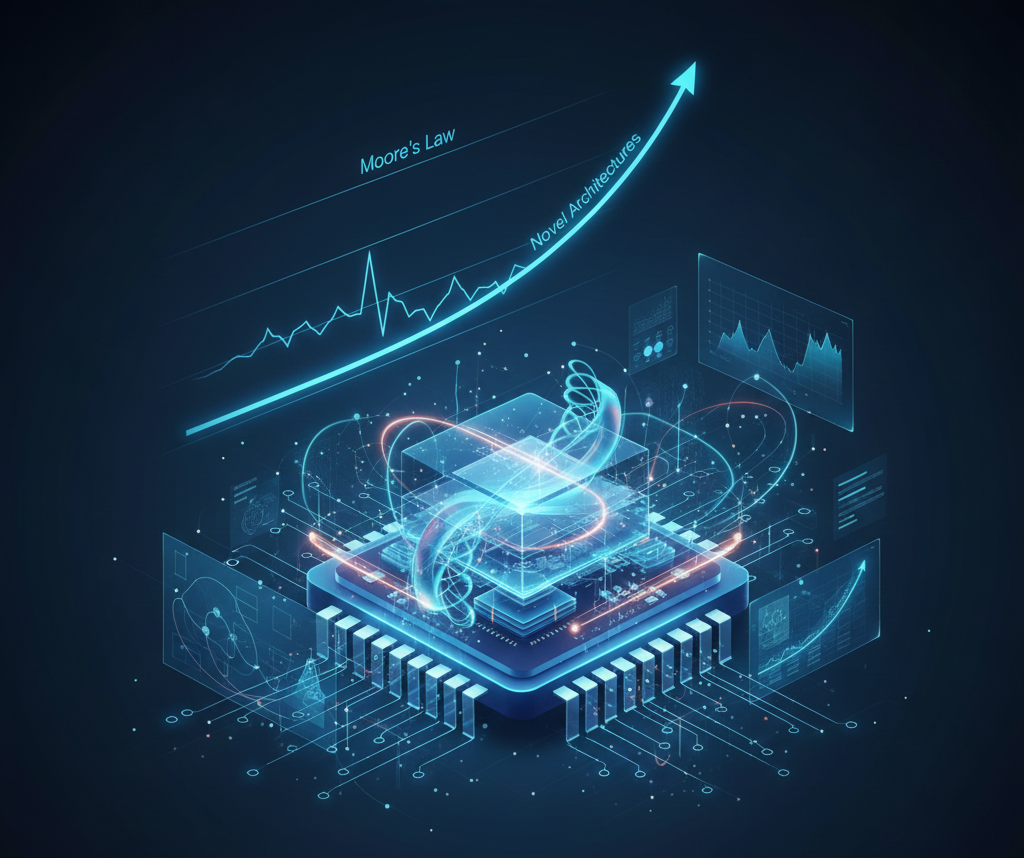
Innovation in the semiconductor space moves at a breathtaking pace, largely driven by the relentless march of Moore’s Law the observation that the number of transistors on a chip doubles roughly every two years. While physical limits for silicon are being approached, new frontiers are opening up.
Advanced Materials and Architecture
To maintain performance gains, engineers are navigating beyond traditional silicon.
- High-Bandwidth Memory (HBM): Stacking memory chips vertically allows for significantly faster data transfer speeds between the processor and memory.
- 2.5D and 3D Packaging: Technologies that stack and integrate multiple chips (e.g., CPU, GPU, and memory dies) horizontally and vertically within a single package dramatically improve performance and power efficiency.
- Compound Semiconductors: Materials like Gallium Nitride (GaN) and Silicon Carbide (SiC) offer superior performance in high-power, high-frequency, and high-temperature applications, making them ideal for 5G and EV power systems.
Beyond Silicon: The Next Generation
Researchers are looking toward entirely new paradigms to replace or augment the transistor.
- Neuromorphic Computing: Designing chips that mimic the structure and function of the human brain’s neural networks, allowing for ultra-efficient AI processing.
- Quantum Computing: While not a replacement for traditional chips, this entirely new computational method relies on manipulating quantum states (qubits) and promises to solve problems currently intractable for even the most powerful supercomputers.
The future of the semiconductor is not only about making things smaller, but also about making them smarter, more efficient, and using new materials to overcome the inherent limitations of current physics.
Conclusion
The semiconductor has evolved from a simple radio part into the world’s most critical manufactured good, powering everything from automotive safety to AI clusters. This specialized hardware forms a capital-intensive, geopolitically vital ecosystem that enables the precise switching required for our digital existence. As we move toward a future of autonomous systems, the drive for smaller, more efficient chips remains the primary catalyst for global progress, ensuring these materials continue to fuel the evolution of the modern world.
Frequently Asked Questions
1. What exactly is a semiconductor?
It’s a material that sits between a conductor (like copper) and an insulator (like glass) in terms of electrical flow. By adding specific impurities, engineers can “turn on” its conductivity at will, creating the precise on/off switches that power all digital logic.
2. Why is silicon the industry favorite?
Silicon is essentially very high-grade sand that is both abundant and easy to process. It forms a stable crystal structure that responds perfectly to “doping,” allowing manufacturers to etch billions of tiny components onto a single surface without the material breaking down.
3. What’s the difference between a chip and an integrated circuit?
In most conversations, they are the same thing. Technically, the semiconductor is the raw material, the integrated circuit (IC) is the complex web of electronic paths, and the “chip” is the final, physical slice of silicon you see on a circuit board.
4. How is AI changing the hardware landscape?
AI is a data glutton that requires chips capable of performing thousands of calculations simultaneously. This has shifted the industry’s focus away from general-purpose CPUs toward specialized GPUs and AI accelerators designed specifically for heavy-duty mathematical workloads.
5. What does a “3nm process” actually mean?
It refers to a specific generation of manufacturing technology. While the number is no longer a literal measurement of a physical gate, a smaller “node” indicates higher transistor density, which translates to faster performance and much better energy efficiency for your devices.