
Summary
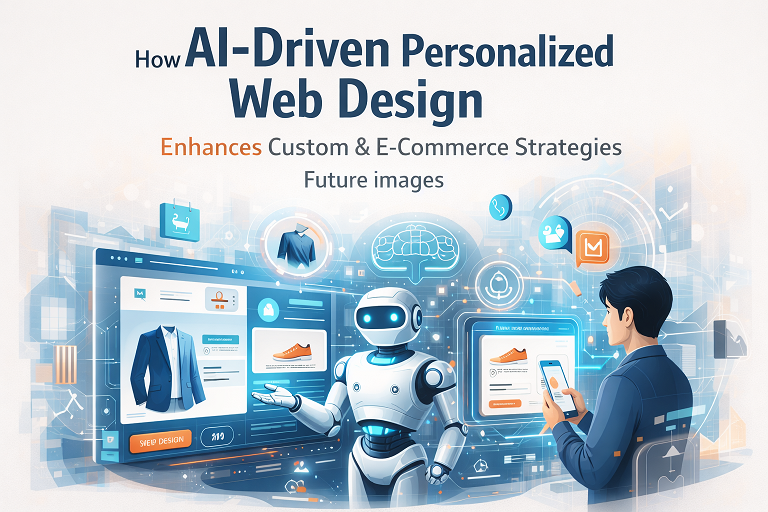
- AI-Driven Web Design shifts digital storefronts from static layouts to dynamic, intelligence-backed experiences.
- Personalization boosts customer retention by delivering unique content based on real-time behavioral data.
- The integration of machine learning simplifies custom ecommerce website design, allowing for predictive navigation.
- Modern ecommerce personalization strategy requires a balance between automated efficiency and human-centric UI/UX.
- Businesses adopting AI-led interfaces see significant improvements in conversion rates and average order values compared to traditional methods.
Introduction
According to Statista (2024), 70% of online shoppers expect brands to offer personalized experiences based on their specific preferences. This demand highlights a significant shift in how digital storefronts function. Static templates that served everyone the same way are rapidly becoming obsolete as intelligence-led systems take the lead.
AI-Driven Web Design provides the technical framework to meet these heightened expectations by adapting interfaces in real-time. This approach moves beyond simple color schemes or layout choices. It involves creating a responsive ecosystem that learns from every click and scroll.
For brands seeking a competitive edge, the marriage of machine learning and aesthetics is no longer optional. It serves as the foundation for modern custom ecommerce website design. By tailoring the digital journey to the individual, businesses can foster deeper connections and drive measurable growth.
The Evolution of Digital Storefronts
A few decades ago, a website was essentially a digital brochure. You put up some photos, listed a phone number, and hoped for the best. If you wanted to change something, you had to hire a developer to manually rewrite the code. It was a slow, rigid process that failed to account for how different people shop.
Moving Beyond Static Templates
The rise of personalized web design has rendered the “one-size-fits-all” model ineffective. When a user arrives at a store, they bring a history of preferences and intent. A static site treats a first-time visitor from New York the same as a returning customer from Tokyo. This lack of nuance leads to missed opportunities.
Dynamic interfaces now allow for modular layouts. These systems rearrange themselves based on the user’s past behavior. If a visitor frequently browses athletic gear, the homepage might lead with the latest running shoes rather than a generic sale banner. This level of relevance is what defines high-performing AI web design for ecommerce.
Core Components of AI-Driven Web Design
Building an intelligent site requires more than just a chatbot in the corner. It requires a deep integration of data processing and visual hierarchy. When these elements work in harmony, the result is a seamless transition from landing page to checkout.
Dynamic Content Generation
Content is king, but relevant content is the emperor. Using machine learning, sites can generate product descriptions, images, and calls to action that resonate with specific demographics. For example, a SaaS platform might highlight “Enterprise Security” for a corporate IP address while showing “Ease of Use” to a small business owner.
Predictive User Journeys
Why wait for a user to find what they need? AI user experience design focuses on predicting the next step. If the system notices a user lingering on a pricing page, it might trigger a live assistant or offer a limited-time discount. It acts as a digital concierge that anticipates needs before they are explicitly stated.
Does a generic website still stand a chance in a market saturated with bespoke options? The data suggests that shoppers are increasingly likely to abandon sites that fail to recognize their unique needs. By automating the discovery process, brands reduce the friction that leads to cart abandonment.
Enhancing Custom Ecommerce Website Design with Intelligence
Custom builds offer the flexibility that off-the-shelf platforms lack. When you combine a custom architecture with artificial intelligence, you get a powerhouse of conversion. This synergy allows developers to build frameworks that are both beautiful and analytically rigorous.
Integrating Behavioral Analytics
Every interaction on a site is a data point. Traditional analytics tell you what happened yesterday. AI-driven systems tell you what is happening right now. By integrating these insights directly into the custom ecommerce website design, brands can adjust their UI/UX on the fly.
- Heatmap Integration: Real-time adjustments to button placement based on hover patterns.
- A/B Testing on Autopilot: The system tests multiple versions of a header and settles on the winner without manual intervention.
- Sentiment Analysis: Adjusting the tone of on-screen text based on the user’s referral source.
A website that greets every visitor with the same generic banner is the digital equivalent of a waiter offering a steak menu to a lifelong vegan. It is awkward, unhelpful, and likely to result in a swift exit. Intelligence-led design ensures the menu matches the guest every single time.
Solving the Paradox of Choice
Too many options can paralyze a buyer. According to a report by McKinsey (2023), personalization can reduce customer acquisition costs by as much as 50%. By filtering the noise and presenting only the most relevant products, AI web design for ecommerce helps shoppers make decisions faster.
Intelligent Product Recommendations
We have all seen the “People also bought” sections. AI takes this further by looking at “People who have a similar browsing velocity and geographic location also bought.” This granular approach to an ecommerce personalization strategy ensures that recommendations feel like helpful suggestions rather than intrusive advertisements.
Visual Search Capabilities
Sometimes users have a style in mind but lack the words to describe it. AI-driven interfaces often include visual search tools. A user can upload a photo of a lamp they like, and the site finds the closest match in its inventory. This bridges the gap between inspiration and purchase.
Technical Implementation of AI User Experience Design
Implementing these features requires a robust tech stack. Most modern developers move toward “headless” commerce. This decouples the frontend presentation layer from the backend logic, making it easier to plug in AI engines without rewriting the entire codebase.
Headless Commerce and API Integration
By using APIs, a custom ecommerce website design can pull in data from various sources—CRM, social media, and inventory management—to inform the user interface. This creates a unified experience where the website is merely the “glass” through which the intelligence is viewed.
Performance and Speed Considerations
Adding intelligence shouldn’t slow down the site. Developers must optimize how scripts load to ensure that personalization happens in milliseconds. A slow site, no matter how “smart” it is, will still lose visitors. The goal is to provide personalized web design that feels instantaneous.
Challenges in Ecommerce Personalization Strategy
Technology is not a silver bullet. There are hurdles to clear, particularly regarding data ethics and consumer trust. A brand must be transparent about how it collects and uses information to provide these tailored experiences.
Navigating Privacy Concerns
With regulations like GDPR and CCPA, designers must prioritize “Privacy by Design.” This means creating AI user experience design that respects opt-out requests and uses anonymized data whenever possible. Striking a balance between being helpful and being “creepy” is the hallmark of a sophisticated brand.
- Transparency: Clearly stating what data is used for personalization.
- Control: Giving users the ability to reset their “profile” on the site.
- Security: Ensuring that the AI models themselves are protected from data leaks.
The Future of AI-Driven Web Design
As we look ahead, the line between a website and a personal assistant will continue to blur. We are moving toward a reality where interfaces are generated entirely on the fly for a single session. This represents the ultimate evolution of AI-Driven Web Design.
For business owners and developers, the focus should remain on the human at the other end of the screen. Technology serves the user, not the other way around. By focusing on relevance, speed, and trust, brands can create digital environments that are not only profitable but genuinely helpful.
Conclusion
Embracing AI-Driven Web Design is no longer a futuristic concept—it is a current necessity for any brand wanting to thrive in a crowded market. By leveraging intelligence to craft a superior ecommerce personalization strategy, companies can turn casual browsers into loyal advocates. The future of the web is personal, and the tools to build that future are already here.
Frequently Asked Question
What is the main benefit of AI-driven design?
The primary advantage is the ability to provide a unique experience for every visitor. By analyzing data in real-time, the site can show relevant products and content, which significantly increases the likelihood of a sale. It removes the guesswork from the user journey.
Is AI web design expensive for small businesses?
While custom builds can be an investment, many SaaS platforms now offer AI-integrated plugins that are affordable. The cost is often offset by the increase in conversion rates and the reduction in manual marketing tasks.
How does personalization affect SEO?
Search engines value user engagement metrics like time-on-site and low bounce rates. Because personalized web design keeps users engaged for longer, it can indirectly improve your search engine rankings.
Does AI replace the need for human web designers?
No, it enhances their work. AI handles the data-heavy tasks and repetitive adjustments, allowing human designers to focus on high-level strategy, brand storytelling, and emotional resonance.