
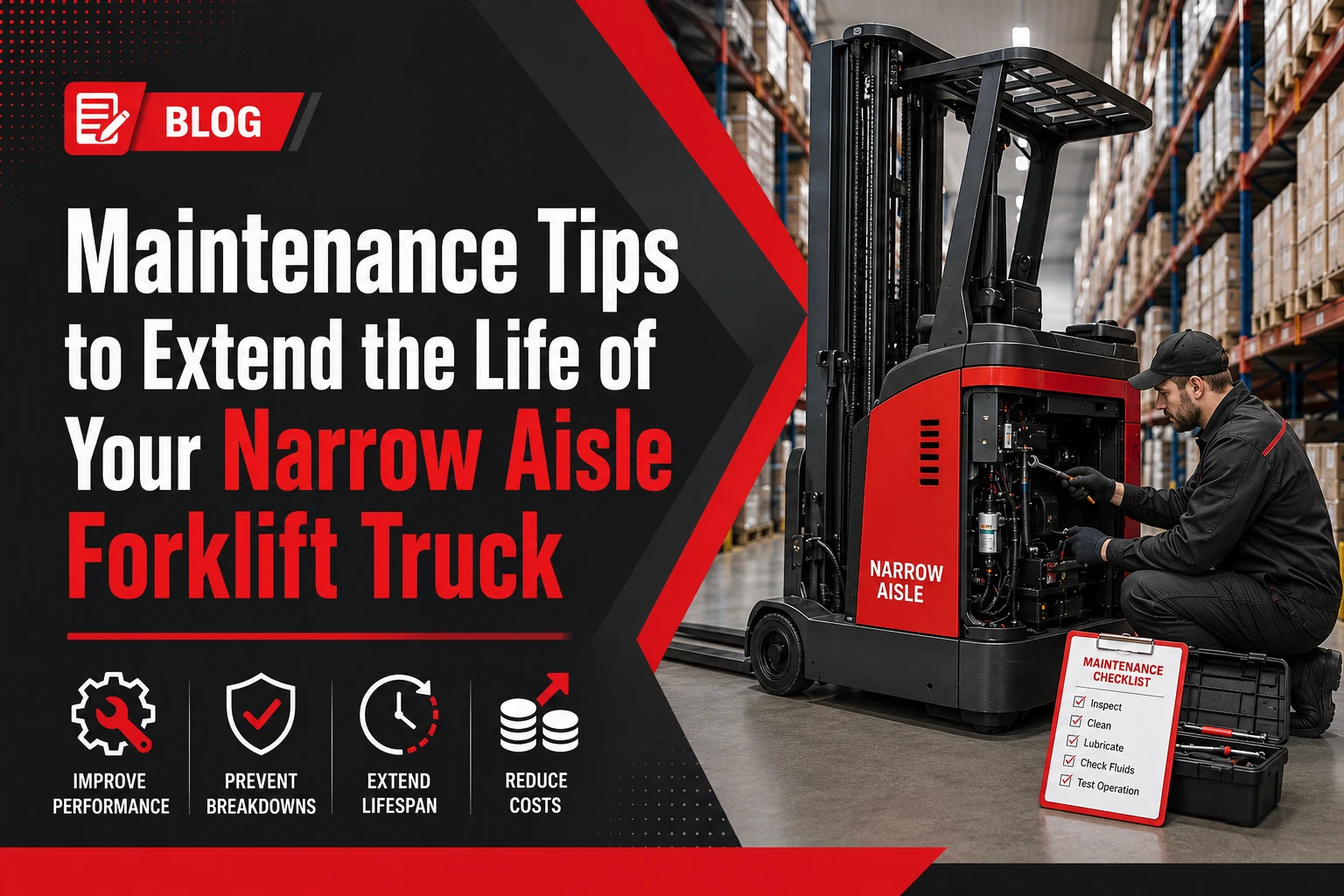
Modern warehouses rely heavily on efficient lifting systems to maximize storage space and improve operational flow. A well-maintained narrow aisle forklift truck not only improves productivity but also reduces costly downtime, unexpected repairs, and safety risks. Whether you operate an electric narrow aisle forklift in a compact warehouse or manage a fleet of VNA forklift truck models for large-scale distribution, regular maintenance plays a major role in extending equipment lifespan.
Businesses investing in advanced warehouse material handling equipment often expect long-term performance and low operational costs. However, neglecting daily inspections, battery care, tire maintenance, and operator handling can shorten the working life of even the most reliable machines. This guide shares practical maintenance strategies based on real warehouse operations to help you protect your investment and keep your forklifts running efficiently for years.
Why Maintenance Matters for Narrow Aisle Forklifts
Unlike standard forklifts, narrow aisle models are specifically designed to operate in tight warehouse spaces with limited turning room. Because these machines work continuously in confined aisles, components such as steering systems, lift chains, hydraulic systems, and drive motors experience higher operational stress.
A properly maintained aisle master forklift truck delivers the following:
- Better lifting efficiency
- Lower repair costs
- Improved operator safety
- Longer battery performance
- Reduced warehouse downtime
- Consistent maneuverability in tight aisles
Warehouses using a forklift for small warehouse operations especially benefit from preventive maintenance because limited equipment availability can quickly disrupt daily logistics.
Perform Daily Pre-Shift Inspections
One of the simplest yet most overlooked maintenance practices is the daily inspection routine. Operators should check the forklift before every shift to identify small issues before they become major repairs.
Key inspection areas include:
Battery Condition
For every electric narrow-aisle forklift, battery health is critical. Check for:
- Loose connections
- Corrosion on terminals
- Proper charging levels
- Damaged cables
- Low water levels in lead-acid batteries
Ignoring battery maintenance often leads to reduced run time and expensive replacement costs.
Tires and Wheels
Warehouse floors may appear smooth, but continuous operation causes tire wear over time. Worn tires reduce stability and affect maneuverability inside narrow aisles.
Inspect for:
- Uneven wear
- Cracks or cuts
- Flat spots
- Reduced traction
This is particularly important for warehouses operating heavy-duty VNA forklift truck systems.
Forks and Mast
Operators should inspect forks for bends, cracks, or uneven alignment. The mast should move smoothly without jerking or unusual noises. Damaged forks can compromise both operator safety and inventory handling.
Keep the Battery Properly Maintained
Battery neglect is one of the biggest reasons forklifts lose performance early. Most warehouse operations today rely on electric-powered machines because they are cleaner, quieter, and more suitable for indoor environments.
To maximize battery life:
- Charge only when necessary
- Avoid overcharging
- Keep charging areas well-ventilated
- Allow batteries to cool before charging
- Clean battery terminals regularly
Many operators unknowingly reduce battery lifespan by interrupting charging cycles frequently. Following manufacturer’s charging recommendations can significantly improve battery efficiency. Warehouses using an aisle master truck for multiple shifts should also maintain a proper battery rotation schedule.
Lubricate Moving Components Regularly
Forklift components operate under constant pressure. Without lubrication, friction increases wear on critical moving parts.
Areas requiring routine lubrication include:
- Lift chains
- Mast rollers
- Steering joints
- Pivot points
- Bearings
Insufficient lubrication often causes noisy operation, rough mast movement, and increased mechanical strain. A reliable lubrication schedule helps maintain smoother forklift performance and prevents premature component failures.
Monitor Hydraulic Systems Carefully
Hydraulic systems are the backbone of lifting operations. Even minor hydraulic issues can affect lifting capacity and overall safety.
Watch for signs such as:
- Oil leaks
- Slow lifting speed
- Unusual noises
- Jerky mast movements
- Reduced lifting power
Hydraulic fluid should always remain at the recommended level and be replaced according to service intervals. Warehouses relying heavily on narrow aisle warehouse forklift equipment should prioritize hydraulic maintenance because these forklifts perform repetitive lifting in restricted environments.
Train Operators on Proper Usage
Even the best-maintained forklift can experience early wear if operated incorrectly. Aggressive driving, overloading, sudden braking, and poor turning habits place unnecessary stress on the machine.
Operator training should include:
- Safe load handling
- Proper turning techniques
- Speed management
- Correct parking procedures
- Battery charging practices
- Reporting maintenance concerns immediately
Experienced operators help extend the working life of forklifts while reducing accident risks inside busy warehouses.
Maintain Clean Warehouse Floors
Many warehouse managers overlook how flooring conditions affect forklift durability. Dust, debris, loose packaging material, and uneven surfaces can damage tires, steering systems, and suspension components.
Maintaining clean floors helps:
- Reduce tire wear
- Improve traction
- Prevent load instability
- Protect wheel bearings
- Improve overall forklift handling
Clean operational environments are especially important for facilities using high-density storage systems with narrow aisle configurations.
Replace Worn Parts Before Failure
Waiting until a component completely fails usually results in higher repair costs and longer downtime. Preventive replacement is always more cost-effective than emergency repairs.
Common replacement items include:
- Tires
- Brake pads
- Hydraulic hoses
- Filters
- Lift chains
- Bearings
Businesses working with an experienced narrow-aisle lift truck supplier often benefit from scheduled service plans and easier access to replacement parts.
Follow Manufacturer Service Intervals
Every forklift model has recommended maintenance schedules based on operating hours. Ignoring these service intervals often shortens machine lifespan dramatically. Routine professional servicing typically includes the following:
- Fluid replacement
- Brake inspections
- Electrical diagnostics
- Chain tension checks
- Motor inspections
- Software diagnostics for electrical systems
Professional servicing ensures minor issues are identified early before they become expensive operational problems. Companies such as Paves Asia Pacific often emphasize preventive maintenance because consistent servicing directly impacts warehouse productivity and equipment reliability.
Store Forklifts Correctly After Use
Improper parking and storage can also reduce forklift lifespan over time.
Best storage practices include:
- Parking on level surfaces
- Lowering forks completely
- Turning off the power properly
- Charging batteries in designated areas
- Keeping forklifts away from moisture
Indoor storage protects electrical systems and reduces long-term corrosion risks. For warehouses operating multiple warehouse material handling equipment units, organized storage practices improve both safety and equipment longevity.
Reduce Overloading Practices
Every forklift has a defined lifting capacity. Exceeding recommended load limits strains the mast, hydraulic system, tires, and drive components.
Overloading often causes:
- Premature tire wear
- Hydraulic damage
- Reduced steering control
- Mast instability
- Higher energy consumption
Warehouse managers should ensure operators clearly understand load capacity guidelines to avoid unnecessary equipment stress.
Use Genuine Replacement Parts
Low-cost aftermarket parts may seem economical initially, but they often reduce forklift performance and reliability.
Using genuine parts ensures:
- Better compatibility
- Improved durability
- Safer operation
- Longer service life
- Reduced maintenance frequency
Reliable suppliers and service partners help maintain consistent equipment quality over time.
Build a Preventive Maintenance Culture
The most successful warehouses treat maintenance as a daily operational priority rather than a reactive task. Creating a preventive maintenance culture encourages operators and technicians to identify issues early and maintain equipment responsibly.
Simple strategies include:
- Maintenance checklists
- Scheduled inspections
- Operator reporting systems
- Service tracking records
- Regular technician reviews
This proactive approach helps businesses maximize the lifespan of every aisle master forklift truck in the warehouse fleet.
Conclusion
A high-performing narrow aisle forklift truck is a long-term investment that requires proper care, operator discipline, and scheduled maintenance. From battery management and hydraulic inspections to operator training and floor cleanliness, every small maintenance step contributes to improved efficiency and reduced repair costs.
Warehouses operating compact storage systems depend heavily on reliable forklifts for uninterrupted daily operations. By implementing preventive maintenance practices, businesses can improve equipment lifespan, enhance workplace safety, and reduce unexpected downtime.
Whether you use an electric narrow aisle forklift in a compact facility or manage a larger fleet of VNA forklift truck models, regular servicing and responsible usage will always deliver better operational value. Many warehouse operators working with Paves Asia Pacific recognize that long-term forklift performance depends as much on maintenance discipline as it does on equipment quality.
FAQs
Q1. How often should a narrow aisle forklift truck be serviced?
A1. Most forklifts should undergo professional servicing every 250 to 500 operating hours depending on usage intensity and warehouse conditions.
Q2. What is the biggest maintenance issue in an electric narrow aisle forklift?
A2. Battery neglect is one of the most common causes of reduced forklift performance and shorter equipment lifespan.
Q3. Why is a VNA forklift truck ideal for compact warehouses?
A3. A VNA forklift truck is designed for tight aisle operations, allowing warehouses to maximize storage capacity without sacrificing maneuverability.
Q4. Can proper maintenance reduce forklift operating costs?
A4. Yes, preventive maintenance helps reduce breakdowns, emergency repairs, downtime, and premature component replacement.
Q5. How do I choose the right forklift for small warehouse operations?
A5. Look for compact models with excellent maneuverability, efficient battery systems, and compatibility with your aisle width and load requirements.