
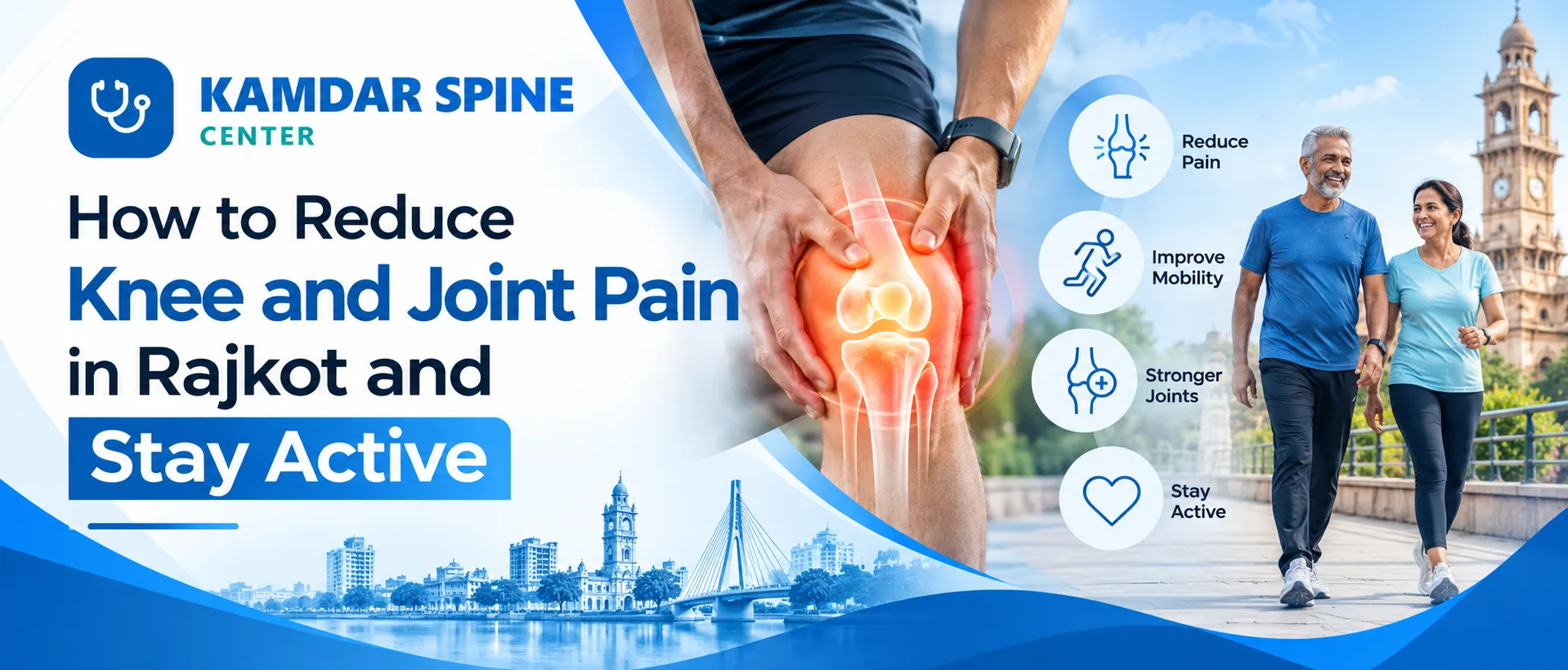
Knee and joint pain can make everyday activities such as walking, climbing stairs, sitting for long periods, and exercising more difficult. Although occasional discomfort may improve with simple self-care, persistent pain can sometimes indicate an underlying condition that needs professional assessment. The right approach depends on the cause, severity, and duration of the symptoms.
For people looking for ways to reduce pain in Rajkot, a practical starting point is to understand the possible causes, stay active within comfortable limits, and seek appropriate medical guidance when necessary. With an individualized plan, many people can work towards improving mobility and maintaining their daily routines.
How Can You Reduce Knee and Joint Pain?
To help manage knee and joint pain and stay active:
- Choose gentle, low-impact activities such as comfortable walking, swimming, or stationary cycling, depending on your symptoms.
- Reduce activities that aggravate the pain, but avoid prolonged inactivity unless advised by a healthcare professional.
- Apply a wrapped cold pack for up to 15–20 minutes to help manage pain or swelling after activity.
- Follow a suitable strengthening and mobility program recommended by a qualified professional.
- Maintain a healthy weight to reduce unnecessary pressure on weight-bearing joints.
- Seek medical advice if the pain persists, worsens, affects sleep, or limits everyday activities.
Treatment depends on the underlying cause, so persistent or severe symptoms should not be managed through home remedies alone.
What Causes Knee and Joint Pain?
Joint pain can develop for several reasons. Identifying the likely cause helps determine which activities and treatments may be appropriate.
1. Osteoarthritis and Age-Related Changes
Osteoarthritis affects the structures within a joint and may cause pain, stiffness, and difficulty moving. Symptoms can become more noticeable when walking, climbing stairs, or getting up after sitting. However, knee pain is not always caused by arthritis, and an assessment may be needed to establish the reason.
2. Muscle Weakness and Reduced Mobility
The muscles around the knees and hips help support movement. Reduced strength, limited flexibility, or a sudden increase in physical activity may contribute to discomfort. A gradual, suitable exercise program can help improve strength and function.
3. Injuries and Overuse
Twisting the knee, falling, playing sports, or repeating the same movement for long periods can strain tissues around a joint. Pain accompanied by significant swelling, instability, or difficulty bearing weight requires prompt medical assessment.
4. Other Medical Conditions
Inflammatory arthritis, gout, infections, and other health conditions can also cause joint pain. A hot, red, swollen joint—particularly with fever or feeling unwell—should be assessed urgently rather than treated only at home.
Practical Ways to Reduce Knee and Joint Pain in Rajkot
Managing discomfort often involves a combination of activity changes, appropriate exercises, and professional guidance.
1. Stay Active Without Overloading Your Joints
Avoiding all movement for extended periods may increase stiffness and reduce muscle strength. Instead, adjust activities according to your comfort level. Shorter walks, gentle mobility exercises, or other low-impact activities may be more manageable than high-impact exercise.
Begin gradually and increase activity only as tolerated. If an activity causes sharp pain, a limp, or worsening symptoms, stop and seek advice about modifying your routine.
2. Use Cold Therapy for Short-Term Relief
If the knee becomes sore or swollen after activity, a cold pack wrapped in a towel may help. Apply it for around 15–20 minutes, and never place ice directly on your skin.
Cold therapy may ease symptoms temporarily, but it does not identify or treat every possible cause of joint pain. Significant or unexplained swelling should be assessed by a healthcare professional.
3. Follow an Appropriate Strengthening Program
Exercises that strengthen the thigh, hip, and surrounding muscles may help support knee function. Depending on your condition, a physiotherapist may recommend controlled leg raises, gentle sit-to-stand movements, flexibility exercises, or other modifications.
Do not start demanding squats, deep knee bends, or intense workouts without considering your symptoms and physical abilities. If you have an existing injury or a diagnosed joint condition, ask your treating professional which exercises are suitable.
4. Maintain a Healthy Weight
For people who are overweight, gradual weight management may reduce the load placed on the knees and hips. A balanced diet and an achievable activity routine can support this goal. Focus on sustainable habits rather than rapid weight loss or restrictive diets.
5. Improve Everyday Movement Habits
Small changes can make daily tasks more comfortable. Wear supportive, well-fitting footwear, take movement breaks during long periods of sitting, and use a handrail when climbing stairs if needed. Avoid repeatedly lifting heavy objects or staying in positions that consistently worsen your pain.
When Should You Seek Professional Pain Treatment in Rajkot?
Consider arranging a medical assessment if knee or joint pain keeps returning, continues for several weeks, affects your sleep, or interferes with work and daily activities. A clinician may ask about your symptoms, examine the affected joint, assess your movement, and recommend investigations when necessary.
Seek urgent medical care if you cannot put weight on the affected leg, experience severe pain after an injury, notice major swelling or a change in joint shape, or have a hot, red joint accompanied by fever. These symptoms may require prompt evaluation.
Understanding Non-Surgical Pain Treatment in Rajkot
Not every painful joint requires surgery. Depending on the diagnosis, treatment may include activity modification, physiotherapy, prescribed medication, targeted rehabilitation, or other clinically appropriate approaches. The goal is to address the cause where possible, manage symptoms, and improve the person’s ability to function.
Non-surgical pain treatment in Rajkot may be worth discussing with a qualified healthcare professional if your condition can be managed conservatively. However, non-surgical care is not suitable for every problem, and some injuries or advanced conditions may require specialist intervention.
If you also experience back discomfort, it is important to distinguish knee pain from symptoms that may originate in the lower back or nerves. People searching for lower back pain in Rajkot or orthopedic back pain Rajkot should receive an assessment based on their specific symptoms rather than assume that all pain has the same cause.
How to Stay Active While Managing Pain
Staying active does not mean pushing through discomfort. It means finding a safe level of movement that fits your current abilities and building up gradually.
Consider these habits:
- Start with manageable sessions: A few short periods of activity may be easier than one long workout.
- Choose joint-friendly options: Walking on a comfortable surface, swimming, or stationary cycling may be suitable for some people.
- Track your symptoms: Note which activities increase pain, how long symptoms last, and whether swelling occurs.
- Allow recovery time: Adjust your activity if pain increases significantly or remains worse after exercise.
- Follow professional advice: An exercise plan may need to change as your symptoms and strength improve.
Regular movement can help maintain strength, flexibility, and daily function for many people with joint conditions. The best routine is one that is appropriate for your diagnosis and can be followed consistently.
Personalized Pain Management in Rajkot
Effective pain management should reflect your symptoms, medical history, activity level, and treatment goals. A plan that works for one person may not be appropriate for another. Avoid taking pain medicines for extended periods without advice, especially if you have other medical conditions or take other medications.
At Kamdar Spine Center, patients can discuss persistent spine-related pain and suitable care options with the clinical team. If you are exploring care for knee or joint symptoms, confirm that the service you need is within the center’s scope of practice and that an appropriate assessment is available.
The priority should be a clear understanding of the problem, realistic treatment goals, and a safe plan to improve everyday movement.
Conclusion
Reducing knee and joint pain starts with understanding the cause, making sensible activity adjustments, and following a suitable treatment plan. Gentle movement, gradual strengthening, supportive daily habits, and timely medical assessment can help many people work towards better mobility. Avoid ignoring persistent symptoms or forcing yourself through severe pain.
For those considering treatment at Kamdar Spine Center, discuss your symptoms and goals with the clinical team to understand which assessment and care options are appropriate for your needs.
Frequently Asked Questions
Q1. How can I reduce knee pain at home?
For mild symptoms, consider temporarily reducing aggravating activities, using a wrapped cold pack for short periods, and maintaining gentle movement as tolerated. If the pain is severe, persistent, or worsening, seek medical advice.
Q2. Which exercises are helpful for knee and joint pain?
Depending on the cause, low-impact activity, gentle range-of-motion exercises, and progressive strengthening may help. A qualified professional can recommend exercises that suit your condition and advise when to avoid particular movements.
Q3. When should I seek pain treatment in Rajkot?
Seek an assessment if pain continues, repeatedly returns, affects sleep, or limits walking and everyday tasks. Severe pain, inability to bear weight, major swelling, or a hot joint with fever may require urgent care.
Q4. Is non-surgical pain treatment suitable for everyone?
No. Some conditions respond to conservative treatment, while others require different specialist care. The appropriate option depends on the diagnosis, severity, and response to treatment.
Q5. Can back pain and knee pain be connected?
Sometimes. Certain back or nerve conditions can cause symptoms that travel into the leg, but knee pain may also originate in the knee itself. An assessment can help distinguish between possible causes.