
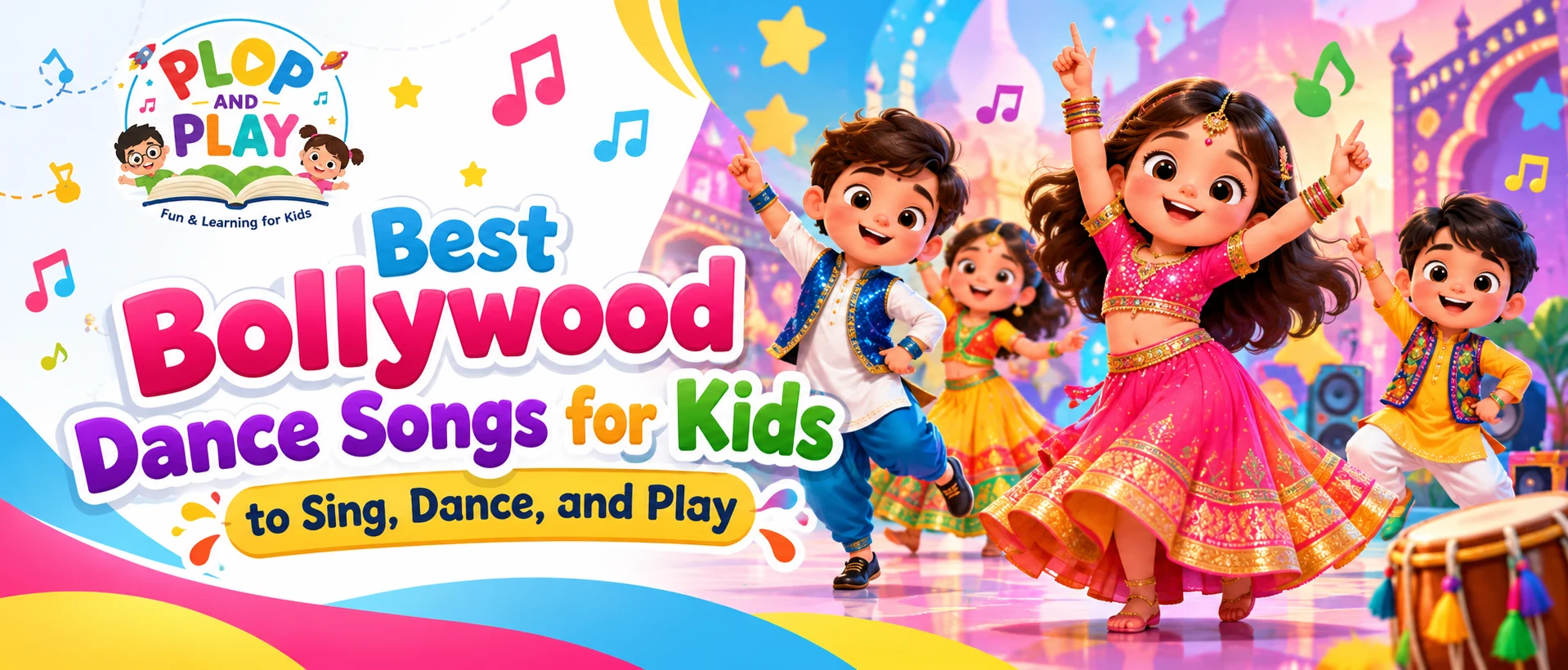
Music is a wonderful way for children to explore rhythm, movement, imagination, and self-expression. Catchy Bollywood melodies, playful animal characters, colourful animations, and simple dance steps can turn an ordinary playtime session into an exciting family activity. For toddlers and preschoolers, the best songs combine easy-to-follow movements, cheerful sounds, repetition, and age-appropriate themes.
Bollywood dance songs for kids can encourage children to clap, jump, sway, march, and dance along with the beat. When songs feature friendly animals, familiar actions, and playful storytelling, they can also inspire curiosity and make movement more engaging.
What Are the Best Bollywood Dance Songs for Kids?
The best Bollywood-inspired dance songs for children are upbeat, easy to follow, and suitable for their age group. Look for songs that feature simple movements, repetitive lyrics, playful characters, and opportunities to participate.
Here are some fun options for music and movement time:
- Animal dance songs: Encourage children to move like elephants, monkeys, pandas, or other friendly animals.
- Bollywood-inspired action songs: Combine clapping, marching, jumping, and simple dance steps.
- Nursery rhymes with a beat: Help younger children follow repetition and familiar words.
- Preschool dance songs: Encourage coordination, listening, and movement through easy routines.
- Sing-along songs: Give children opportunities to repeat words, sounds, and short phrases.
- Freeze-dance games: Invite children to dance while the music plays and pause when it stops.
Choose age-appropriate music, keep the movements simple, and let children participate at their own pace.
1. Bollywood Dance Songs for Kids That Make Playtime Exciting
Bollywood-inspired children’s music brings together lively rhythms, expressive movements, and colourful storytelling. Unlike routines designed for older dancers, children’s versions can use simplified choreography and playful actions that are easier for young learners to follow.
A fun dance session might begin with clapping to the beat, followed by marching in place, waving arms, and performing a few repeated movements. Children can learn by watching an animation, copying a parent, or creating their own dance steps.
When choosing a Bollywood kids dance song, consider the pace, lyrics, length, and overall presentation. A cheerful melody with clear rhythms can make it easier for children to anticipate movements and join in.
You do not need a complicated routine to make music time enjoyable. A few familiar actions repeated throughout the song can give toddlers and preschoolers the confidence to participate.
2. Animal Dance Party for Kids: Dance Like Your Favourite Animals
An Animal dance party for kids combines music, imagination, and movement. Children can pretend to be different animals while exploring how each one moves.
Try these playful ideas during a family dance session:
- Elephant stomp: Take slow, gentle steps and swing your arms like an elephant’s trunk.
- Monkey bounce: Bounce lightly in place and make playful monkey movements.
- Panda sway: Move from side to side with relaxed arm movements.
- Rabbit hops: Perform small, controlled hops if the child can do so safely.
- Bird flaps: Stretch your arms out and gently flap them like wings.
- Lion march: March in place and make a friendly lion pose.
A fun animal dance can also become a simple guessing game. Pause the music and ask children which animal they want to imitate next. They can choose an animal, demonstrate its movement, and invite others to copy them.
Keep the space clear and adapt movements to each child’s age and physical abilities. Children who prefer not to jump can march, clap, sway, or move their arms instead.
3. Animal Songs for Toddlers That Encourage Participation
Animal songs for toddlers are especially engaging when they combine familiar animal sounds, repetition, and easy movements. A child might hear an elephant trumpet, a monkey chatter, or a bird chirp and then imitate the sound.
These activities offer opportunities to practise listening and imitation in a playful setting. Parents and caregivers can ask simple questions during the song, such as “Which animal is dancing?” or “Can you flap your wings like a bird?”
For younger children, shorter songs with predictable patterns may be easier to follow than lengthy, complicated routines. Repeating the same animal names and actions can help children become familiar with the words and movements.
Consider choosing songs that introduce a small number of animals at a time. As children become comfortable with the actions, you can add new characters or invite them to invent their own animal dance.
The aim is not to make children memorise every lyric. It is to give them an enjoyable opportunity to listen, move, imitate, and participate.
4. Nursery Rhymes for Kids That Combine Singing and Dancing
Nursery rhymes for kids can become more interactive when movement is added to familiar words and melodies. Instead of listening passively, children can clap, tap their knees, march, or perform actions that match the lyrics.
For example, a song about animals might include a trunk-swinging motion, while a rhyme about travelling could inspire children to march or pretend to drive a bus.
Simple actions can help children connect words with movement. Repeating the same sequence also makes it easier for them to anticipate what comes next and participate independently.
Parents can turn nursery rhymes into short movement games by changing the speed, pausing between verses, or asking children to choose the next action. Keep the experience relaxed and enjoyable rather than focusing on perfect timing.
A mixture of traditional rhymes and modern children’s music can keep sessions interesting while giving children familiar patterns to follow.
5. Preschool Dance Songs for Learning Through Movement
Preschool dance songs can support playful opportunities to explore coordination, rhythm, balance, and listening. Songs with clear instructions help children practise following simple directions while moving their bodies.
Try incorporating these actions into a music session:
- Clap your hands when the beat becomes louder.
- March in place while counting a few steps.
- Reach up high, then bring your arms down slowly.
- Turn gently in a circle where there is enough space.
- Freeze in a funny pose when the music pauses.
- Copy a sequence of two or three movements.
Preschoolers often enjoy taking turns leading the activity. One child can choose an action, and everyone else can try it. This creates opportunities for creativity and participation without requiring formal dance training.
Choose routines that match the children’s abilities and avoid movements that are too fast or difficult to control. Give children time to rest and encourage them to move in ways that feel comfortable.
6. Kids Music and Movement: Benefits Beyond Entertainment
Kids music and movement activities can offer more than a fun break. They provide opportunities for children to explore sound, express emotions, and practise different physical actions.
Rhythm and Listening
Clapping, marching, and moving to a beat give children opportunities to notice patterns in music. Pausing and restarting songs can also encourage them to listen for changes.
Coordination and Body Awareness
Simple actions such as reaching, swaying, and marching allow children to explore how their bodies move in space. These activities should be adapted to their abilities and comfort levels.
Language and Imitation
Sing-along songs expose children to repeated words, animal names, sounds, and action phrases. Copying movements and sounds can make participation more interactive.
Creativity and Social Interaction
Dancing together can encourage children to take turns, imitate one another, and invent their own movements. Families and educators can participate alongside children to make the activity more welcoming.
Every child responds differently to music, so allow them to observe, join in, or take breaks as needed.
7. How to Create a Fun and Safe Dance Session at Home
You can organise a simple dance party without special equipment or complicated preparation.
First, choose a few short songs with different rhythms. Start with gentle movements, then introduce more energetic actions if the children enjoy them. Leave enough space for everyone to move without bumping into furniture.
Next, alternate between dancing and quieter activities. Children might clap along to a slow song, imitate animal movements during an upbeat track, and finish with gentle swaying.
Keep the volume comfortable and supervise young children throughout the session. Avoid slippery floors, crowded spaces, and movements that are inappropriate for their age or abilities.
For toddlers, a short session may be enough. Preschoolers might enjoy a longer activity with song choices, animal guessing games, and freeze-dance rounds. Follow the children’s interest rather than expecting them to dance continuously.
8. Discover More Music and Movement Fun
Families looking for engaging children’s entertainment can explore videos that combine catchy music, friendly characters, and simple actions. A well-designed animal dance video can invite children to sing along, imitate different animals, and invent their own movements.
Plop And Play offers a child-focused space for discovering playful videos and educational entertainment. When selecting content, parents should consider age suitability, lyrics, animation style, sound levels, and whether the movements are safe to copy.
Try watching a short song together before encouraging children to dance along. You can also pause the video and ask children to choose an animal, make its sound, or demonstrate how it might move.
Remember that children’s interests vary. Some may love energetic dancing, while others prefer singing, watching, or performing just one or two actions. All of these can be enjoyable ways to experience music.
Conclusion
Bollywood-inspired music, animal songs, and playful nursery rhymes can turn everyday playtime into an opportunity for singing, dancing, and creative movement. By choosing age-appropriate songs with simple actions, families can make music sessions enjoyable and accessible for toddlers and preschoolers.
Whether children are stomping like elephants, flapping like birds, or clapping along to a catchy beat, the goal is to encourage participation, imagination, and fun. Keep the activities safe, follow each child’s pace, and let every dance session become a joyful experience.
Frequently Asked Questions
Q1. What are the best Bollywood dance songs for kids?
A1. The best choices are upbeat, age-appropriate songs with clear rhythms, simple movements, and playful themes. Animal songs and easy action songs can be especially engaging for toddlers and preschoolers.
Q2. What is an Animal dance party for kids?
A2. It is a music and movement activity where children pretend to move like animals. They might stomp like elephants, hop like rabbits, flap their arms like birds, or sway like pandas.
Q3. Are animal songs suitable for toddlers?
A3. Many animal songs can be suitable for toddlers when the lyrics, sounds, visuals, and movements are age-appropriate. Adults should supervise young children and adapt activities to their abilities.
Q4. How do preschool dance songs support learning?
A4. They create opportunities to practise listening, imitation, rhythm, coordination, and following simple instructions. Children can also use songs to explore language and creative expression.
Q5. How long should a kids’ dance session last?
A5. There is no single ideal duration. Start with a few short songs and adjust according to the child’s age, interest, energy, and need for breaks.