
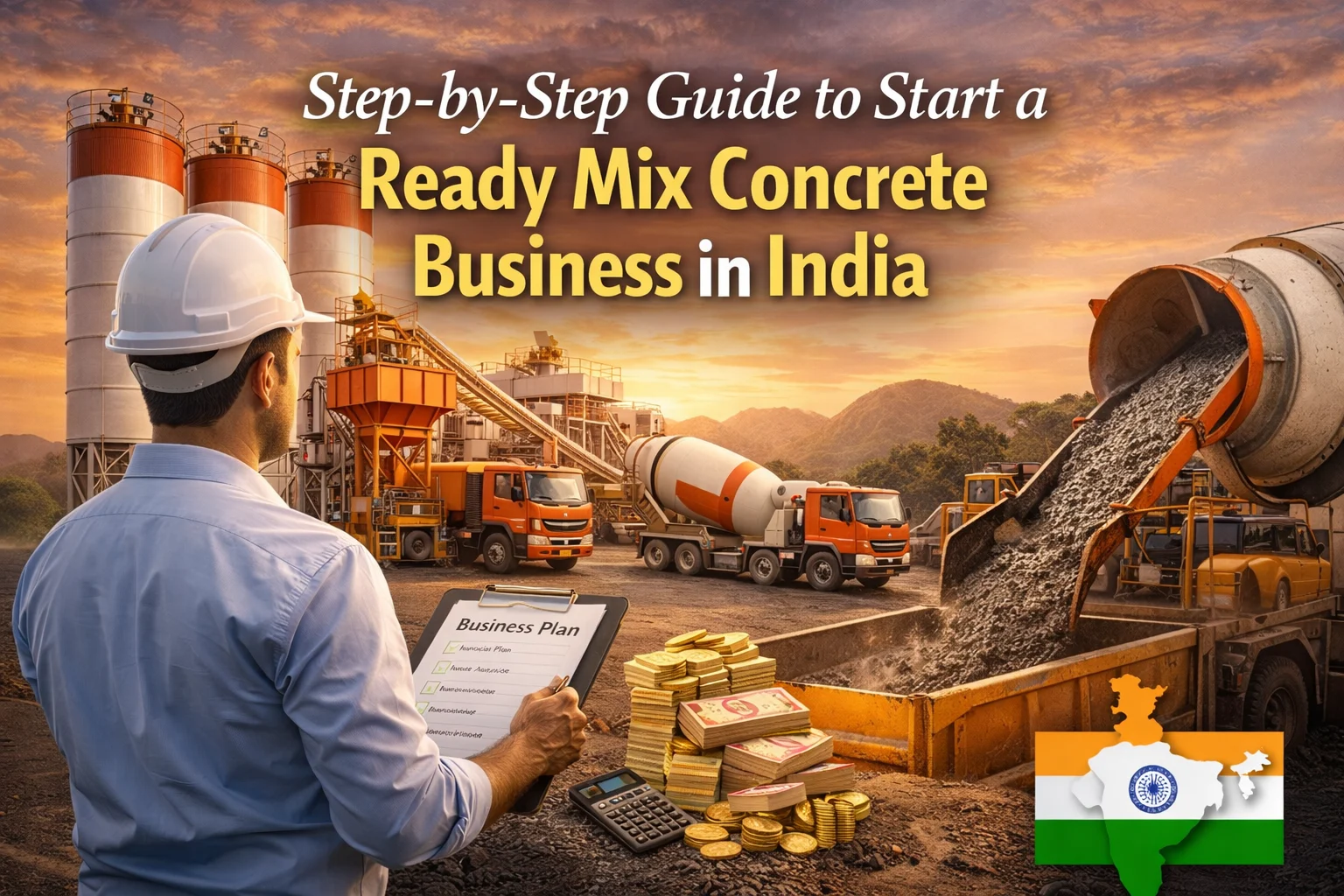
Starting a Ready Mix Concrete (RMC) business in India can be a highly profitable venture, especially with the rapid growth in infrastructure, real estate, and road construction. However, success depends on proper planning, choosing the right equipment, and partnering with a reliable ready mix concrete plant manufacturer in India. This step-by-step guide covers everything you need from investment planning to plant setup—so you can launch and scale your RMC business efficiently.
Why Start a Ready Mix Concrete Business?
The demand for ready mix concrete is rising due to:
- Faster construction timelines
- Consistent concrete quality
- Reduced labor dependency
- Large-scale infrastructure projects
Investing in a ready mix concrete batching plant allows contractors and developers to meet high-volume requirements with precision and efficiency.
Step 1: Conduct Market Research
Before investing, analyze your local market:
- Identify demand in your target area
- Study competitors and their pricing
- Understand customer segments (builders, contractors, government projects)
Focus on areas with high construction activity such as highways, urban development zones, and industrial projects.
Step 2: Create a Business Plan
A solid business plan should include:
- Initial investment and funding sources
- Expected ROI and break-even timeline
- Operational costs (labor, fuel, maintenance)
- Marketing and sales strategy
Understanding the ready-mix concrete batching plant price is crucial at this stage, as it forms a major part of your capital investment.
Step 3: Choose the Right Location
Location plays a critical role in profitability.
Consider:
- Proximity to construction sites
- Availability of raw materials (cement, aggregates, water)
- Good road connectivity for transit mixers
- Compliance with environmental regulations
Avoid areas far from demand centers to reduce transportation costs.
Step 4: Select the Right Equipment
Choosing the right plant is the backbone of your business.
You’ll need:
- Batching plant (stationary or mobile)
- Transit mixers
- Concrete pumps
- Storage silos
Work with a trusted RMC batching plant manufacturer to ensure high-quality machinery, durability, and performance.
Step 5: Decide Plant Capacity
Capacity depends on your project demand:
- Small scale: 30–60 m³/hr
- Medium scale: 60–90 m³/hr
- Large scale: 90–120+ m³/hr
Choosing the correct capacity ensures optimal production without unnecessary investment.
Step 6: Obtain Licenses & Approvals
You’ll need to comply with government regulations, including:
- Pollution Control Board clearance
- Factory license
- GST registration
- Local municipal approvals
Ensure all legal requirements are fulfilled before starting operations.
Step 7: Partner with a Reliable Supplier
Your supplier plays a crucial role in long-term success.
Choose a trusted RMC batching plant supplier in Ahmedabad or your preferred location who offers:
- High-quality machinery
- Installation support
- Operator training
- After-sales service
Companies like Atlas Equipments are known for delivering reliable solutions with strong service support.
Step 8: Installation & Setup
Once equipment is finalized:
- Prepare site layout and foundation
- Install machinery with expert supervision
- Test plant operations
- Train staff and operators
Proper installation ensures smooth and efficient production.
Step 9: Hire Skilled Workforce
You’ll need:
- Plant operators
- Quality control engineers
- Drivers for transit mixers
- Maintenance technicians
Skilled manpower ensures consistent quality and efficient operations.
Step 10: Focus on Quality Control
Quality is key to customer retention.
Implement:
- Regular material testing
- Mix design optimization
- Strict batching accuracy
- On-site quality checks
High-quality concrete builds trust and long-term client relationships.
Step 11: Marketing & Lead Generation
To grow your business:
- Build a professional website
- Optimize for SEO (target keywords like ready mix concrete batching plant)
- Use Google Ads and social media
- Network with contractors and builders
Offer competitive pricing and reliable delivery to attract repeat clients.
Step 12: Monitor Costs & Improve Efficiency
Track:
- Production costs per cubic meter
- Fuel and energy consumption
- Maintenance expenses
Use automation and modern technology to reduce wastage and increase profitability.
Common Challenges & Solutions
Challenge: High initial investment
Solution: Start with a smaller plant and scale gradually
Challenge: Competition
Solution: Focus on quality and timely delivery
Challenge: Maintenance issues
Solution: Choose a reliable manufacturer and follow preventive maintenance
Final Thoughts
Starting a Ready Mix Concrete business in India requires strategic planning, the right equipment, and a reliable supplier. By investing in a high-quality readymix concrete batching plant, you can ensure consistent production, better margins, and long-term growth. Take a step-by-step approach, focus on quality, and build strong relationships with clients to succeed in this competitive industry. Partnering with an experienced manufacturer like Atlas Equipment can further strengthen your foundation for success.
FAQs
Q1. What is a ready mix concrete batching plant?
A1. A ready mix concrete batching plant is a facility that combines cement, aggregates, water, and additives in precise proportions to produce high-quality concrete for construction projects.
Q2. How much investment is required to start an RMC business in India?
A2. The investment depends on plant capacity, automation level, and location. A small setup may start from ₹25–50 lakhs, while larger plants can require ₹1–3 crore or more.
Q3. What factors affect ready mix concrete batching plant price?
A3. Pricing depends on plant capacity, type (mobile or stationary), level of automation, quality of components, and installation requirements.
Q4. How do I choose the best ready mix concrete plant manufacturer in India?
A4. Look for experience, product quality, customization options, after-sales support, and client reviews. A reliable manufacturer ensures long-term performance and minimal downtime.
Q5. What is the ideal capacity for an RMC batching plant?
A5. Capacity depends on your project needs. Small projects may require 30–60 m³/hr, while large infrastructure projects may need 90–120 m³/hr or more.
Q6. Do RMC batching plant manufacturers provide installation and training?
A6. Yes, most reputed manufacturers offer complete support, including plant installation, operator training, and ongoing maintenance services.
Q7. What licenses are required to start a ready mix concrete business in India?
A7. You will need Pollution Control Board approval, factory license, GST registration, and local authority permissions before starting operations.
Q8. Is a mobile RMC plant better than a stationary plant?
A8. A mobile plant is ideal for short-term or remote projects, while a stationary plant is better for long-term, high-volume production.
Q9. How long does it take to set up a ready mix concrete plant?
A1. Setup time can range from a few days to a few weeks, depending on plant size, site conditions, and installation complexity.
Q10. Who is a trusted RMC batching plant supplier in Ahmedabad?
A10. Choosing an experienced supplier is important for quality and support. Companies like Atlas Equipments are known for reliable solutions and strong after-sales service.