
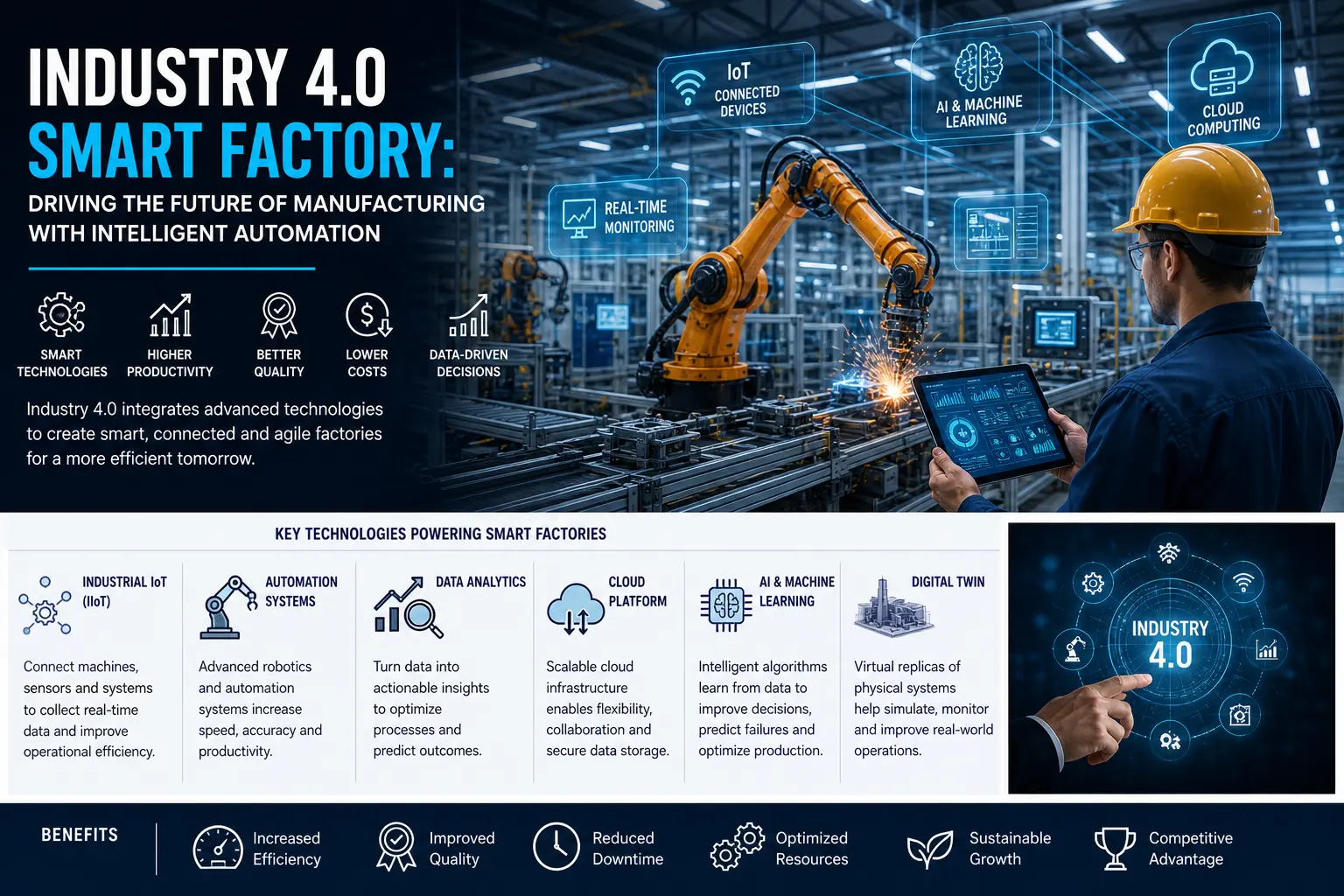
Manufacturing is undergoing a major transformation, and the concept of the Industry 4.0 smart factory is at the center of this evolution. Businesses across the globe are adopting smart manufacturing solutions and Industry 4.0 automation systems to stay competitive, improve efficiency, and reduce operational costs. This shift is not just about automation—it’s about complete digital transformation in manufacturing, where data, machines, and systems work together seamlessly.
What is an Industry 4.0 Smart Factory?
An Industry 4.0 smart factory is a highly digitized and connected production environment that uses advanced technologies to automate and optimize manufacturing processes. Unlike traditional factories, smart factories rely on smart factory technologies such as IoT, artificial intelligence, cloud computing, and advanced analytics.
These technologies enable machines to communicate with each other, analyze data in real time, and make intelligent decisions without human intervention. The result is a more agile, efficient, and responsive manufacturing system.
Key Components of Smart Manufacturing Solutions
Modern smart manufacturing solutions are built on a combination of advanced tools and platforms designed to enhance productivity and performance.
- Smart Factory Software Solutions
At the core of every smart factory are powerful smart factory software solutions that manage operations, monitor performance, and integrate systems across the production line. These solutions provide real-time visibility into manufacturing processes, helping businesses make informed decisions.
- Smart Factory Automation System
A smart factory automation system uses robotics, sensors, and control systems to automate repetitive tasks. This reduces human error, increases production speed, and ensures consistent product quality.
- Smart Manufacturing Platform
A centralized smart manufacturing platform connects different systems, machines, and data sources. It acts as the backbone of the factory, enabling seamless communication and coordination across all operations.
- Intelligent Factory Management System
An intelligent factory management system oversees production activities, tracks performance metrics, and optimizes workflows. It ensures that resources are used efficiently and production targets are met.
Role of IoT and IIoT in Smart Factories
The integration of IoT is one of the most critical aspects of smart manufacturing. Smart factory IoT integration allows machines, sensors, and devices to communicate and share data in real time.
Industrial IoT (IIoT) Solutions
Industrial IoT (IIoT) solutions are specifically designed for manufacturing environments. They enable real-time monitoring, predictive maintenance, and improved asset management.
IoT in Smart Manufacturing
With IoT in smart manufacturing, factories can collect and analyze data from every stage of production. This helps identify inefficiencies, reduce waste, and improve overall performance.
Connected Factory Solutions
Connected factory solutions ensure that all components of the manufacturing process are linked together. This connectivity allows for better coordination, faster response times, and improved decision-making.
IIoT Platform for Manufacturing
An IIoT platform for manufacturing provides the infrastructure needed to collect, store, and analyze data from connected devices. It supports advanced analytics and helps businesses gain valuable insights into their operations.
Industrial IoT Data Analytics
With industrial IoT data analytics, manufacturers can transform raw data into actionable insights. This enables predictive maintenance, quality control, and process optimization.
Benefits of Industry 4.0 Smart Factory
Adopting an Industry 4.0 smart factory offers numerous advantages for manufacturers:
- Increased Efficiency
Automation and real-time monitoring streamline operations, reducing downtime and improving productivity.
- Improved Product Quality
Advanced analytics and process control ensure consistent quality across all production stages.
- Cost Reduction
Optimized resource utilization and predictive maintenance help reduce operational costs.
- Enhanced Flexibility
Smart factories can quickly adapt to changing market demands and production requirements.
- Data-Driven Decision Making
With access to real-time data, businesses can make informed decisions that drive growth and innovation.
Digital Transformation in Manufacturing
The journey toward a smart factory begins with digital transformation in manufacturing. This involves integrating digital technologies into every aspect of production, from design and planning to execution and delivery.
By adopting smart factory technologies, manufacturers can create a fully connected ecosystem where data flows seamlessly across systems. This not only improves efficiency but also enables continuous improvement and innovation.
Challenges in Implementing Smart Factory Solutions
While the benefits are significant, implementing smart manufacturing solutions comes with its own set of challenges:
- High initial investment costs
- Integration with legacy systems
- Data security and privacy concerns
- Skill gaps in the workforce
However, with the right strategy and technology partners, these challenges can be effectively managed.
Future of Smart Manufacturing
The future of manufacturing lies in the continued evolution of Industry 4.0 automation systems and smart factory technologies. Emerging trends such as AI-driven automation, digital twins, and edge computing will further enhance the capabilities of smart factories.
As industrial IoT (IIoT) solutions become more advanced, manufacturers will gain deeper insights into their operations, enabling even greater efficiency and innovation.
Conclusion
The Industry 4.0 smart factory is no longer a concept of the future—it is a reality shaping the manufacturing industry today. By leveraging smart manufacturing solutions, smart factory software solutions, and industrial IoT data analytics, businesses can transform their operations and achieve sustainable growth.
From smart factory IoT integration to connected factory solutions, the adoption of these technologies is essential for staying competitive in today’s fast-paced industrial landscape. Companies that embrace this transformation will be better positioned to lead the future of manufacturing with innovation, efficiency, and intelligence.