
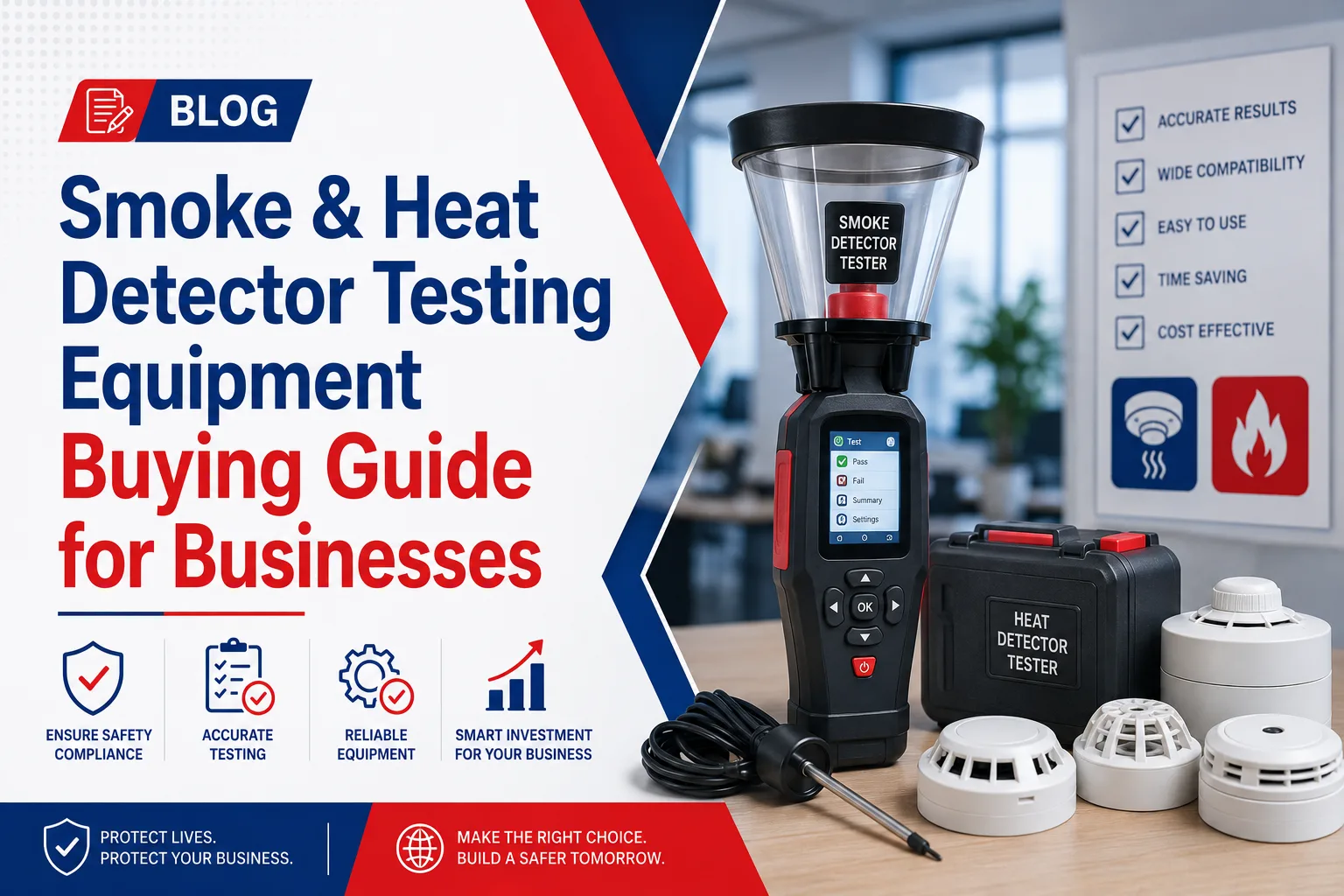
Choosing the right fire detector testing tools is not as simple as buying standard maintenance equipment. Businesses today operate under strict fire safety regulations, and every smoke or heat detector installed inside a building must function properly during emergencies. Whether it is a commercial tower, hospital, warehouse, hotel, factory, or retail property, regular detector testing is critical for maintaining safety and compliance.
This is where reliable Smoke & Heat Testing Equipment becomes essential. Professional testing tools help technicians safely inspect smoke and heat detectors, identify faults, reduce false alarms, and maintain accurate fire detection performance. Using improper or outdated testing methods can damage detectors, create inconsistent inspection results, and even lead to compliance failures.
Modern businesses now prefer advanced Smoke and heat detector testing equipment because it improves inspection speed, technician safety, and testing accuracy across different environments. From high ceilings to difficult industrial locations, specialized testing systems make inspections more efficient and dependable.
Before investing in any Smoke detector testing equipment or Heat detector testing equipment, businesses should understand what features matter most, which certifications are required, and how to choose equipment suitable for their specific building requirements. Companies like Novus Fire and Security LLC understand that selecting the right testing tools directly impacts fire safety performance and long-term system reliability.
Why Businesses Need Professional Testing Equipment
Many organizations still rely on outdated detector testing methods that involve ladders, smoke paper, canned smoke misuse, or unsafe heat sources. These approaches are not only inefficient but can also damage sensitive detectors or create inaccurate test results.
Using Professional smoke heat testing equipment provides several advantages:
- Faster detector inspections
- Better technician safety
- Accurate detector response testing
- Reduced false alarms
- Easier compliance reporting
- Lower maintenance risks
- Improved testing consistency
For businesses managing large buildings or multiple facilities, investing in quality testing equipment saves time and improves overall fire safety maintenance.
Understanding Different Types of Detector Testing Equipment
Not all detector testing systems serve the same purpose. Businesses should understand the main categories before purchasing equipment.
Smoke Detector Testing Equipment
Smoke detector testing equipment is designed to simulate smoke conditions safely so technicians can confirm detector responsiveness without causing contamination or damage.
Common smoke testing tools include:
- Aerosol smoke dispensers
- Smoke simulation kits
- Detector testing poles
- Cordless smoke testers
- Multi-detector testing systems
These tools are commonly used in offices, shopping centers, hotels, schools, and healthcare facilities.
Heat Detector Testing Equipment
Heat detector testing equipment is specifically designed to test fixed temperature and rate-of-rise heat detectors.
These systems typically use controlled heat generation rather than open flames or unsafe heating methods.
Heat testing tools are often used in:
- Industrial facilities
- Manufacturing plants
- Commercial kitchens
- Parking garages
- Warehouses
Choosing the correct heat testing equipment helps avoid sensor damage while ensuring accurate detector activation.
Key Features to Look for When Buying Smoke & Heat Testing Equipment
Businesses should focus on equipment quality, safety, compatibility, and long-term usability before making a purchase.
Detector Compatibility
The equipment should support multiple detector brands and models. This helps businesses avoid buying separate tools for different systems.
Compatibility is especially important for companies managing large facilities with mixed fire alarm installations.
Telescopic Access Systems
High ceilings create challenges during inspections. Modern testing poles allow technicians to test detectors safely from ground level without relying heavily on ladders or lifts.
This improves:
- Technician safety
- Inspection speed
- Workplace efficiency
- Access to hard-to-reach areas
Certified Testing Technology
Businesses should always choose Certified smoke and heat testing equipment that complies with recognized international safety standards.
Certified systems offer:
- Safer testing procedures
- Accurate detector simulation
- Compliance support
- Reduced risk of detector damage
Using non-certified tools may affect inspection reliability and regulatory compliance.
Lightweight and Portable Design
Large-scale inspections can take several hours. Lightweight equipment reduces technician fatigue and improves productivity during long maintenance schedules.
Portable systems are especially useful for:
- Multi-floor buildings
- Industrial sites
- Hotels
- Airports
- Shopping malls
Fast Detector Activation
Modern testing tools provide rapid smoke or heat activation, helping technicians complete inspections faster without compromising testing quality.
This becomes extremely valuable in large commercial facilities where hundreds of detectors require routine inspection.
How to Choose Equipment Based on Business Type
Different industries require different detector testing solutions.
Commercial Buildings
Office buildings usually require versatile testing equipment that supports multiple detector types across conference rooms, hallways, server rooms, and public spaces.
Healthcare Facilities
Hospitals and clinics require quiet, efficient, and reliable testing tools that minimize disruption to patients and medical operations.
Manufacturing Plants
Factories often contain dust, heat, chemicals, and high ceilings, making durable and industrial-grade testing equipment essential.
Hospitality Industry
Hotels require efficient detector testing systems because inspections must often occur without disturbing guests or daily operations.
Warehouses and Logistics Centers
Large warehouses require long-reach testing systems capable of safely accessing detectors installed at significant heights.
Why Certification Matters in Detector Testing Equipment
Fire safety compliance regulations continue to become stricter worldwide. Businesses must ensure their detector testing procedures align with recognized industry standards.
Using Certified smoke and heat testing equipment helps organizations:
- Meet inspection requirements
- Improve testing accuracy
- Support insurance compliance
- Reduce operational risk
- Maintain audit documentation
Certified equipment also helps technicians perform consistent inspections without risking detector damage or inaccurate readings.
Common Mistakes Businesses Make When Buying Testing Equipment
Many businesses focus only on price when purchasing fire detector testing tools. However, lower-cost equipment may lead to long-term operational problems.
Buying Non-Compatible Equipment
Some testing systems only work with limited detector models, creating unnecessary maintenance complications.
Ignoring Safety Features
Improper testing equipment can increase workplace safety risks during inspections.
Choosing Low-Quality Testing Aerosols
Poor-quality smoke simulation products may contaminate detectors or produce inconsistent results.
Overlooking Technician Comfort
Heavy or poorly designed equipment slows inspections and increases fatigue.
Failing to Verify Certifications
Uncertified tools may not meet regulatory inspection standards.
The Long-Term Benefits of Investing in Professional Equipment
High-quality Professional smoke heat testing equipment provides long-term operational advantages that go far beyond basic compliance.
Reduced Maintenance Costs
Reliable equipment helps detect issues early before they become expensive system failures.
Faster Inspection Completion
Efficient tools reduce labor hours and improve maintenance productivity.
Improved Fire Safety Reliability
Accurate testing ensures detectors respond properly during emergencies.
Better Compliance Management
Professional equipment supports inspection records and audit preparation.
Enhanced Technician Safety
Modern access systems reduce risks associated with ladder work and unsafe testing methods. Novus Fire and Security LLC works with businesses that prioritize long-term fire safety performance through dependable detector testing solutions and professional inspection practices.
Questions Businesses Should Ask Before Purchasing
Before investing in detector testing systems, businesses should ask suppliers several important questions:
- Is the equipment certified for commercial use?
- Does it support multiple detector brands?
- Can it safely test both smoke and heat detectors?
- Is the equipment lightweight and portable?
- Are replacement parts easily available?
- Does the supplier provide technical support?
- Can the system improve inspection efficiency?
These questions help businesses avoid purchasing equipment that may become difficult to maintain or upgrade later.
Best Practices for Using Smoke & Heat Testing Equipment
Buying the right tools is only part of maintaining effective fire safety systems. Proper usage also matters.
Schedule Routine Testing
Follow local fire safety regulations and maintenance schedules.
Train Technicians Properly
Well-trained technicians perform safer and more accurate inspections.
Store Equipment Carefully
Proper storage helps extend equipment lifespan and maintain performance quality.
Replace Damaged Components Quickly
Faulty testing accessories can create inaccurate inspection results.
Maintain Documentation
Accurate records support compliance audits and insurance requirements.
Conclusion
Reliable fire detection systems depend on proper inspection and maintenance. Investing in quality Smoke & Heat Testing Equipment helps businesses improve fire safety performance, maintain compliance, reduce operational risks, and ensure dependable detector functionality.
Whether selecting advanced Smoke detector testing equipment for commercial buildings or specialized Heat detector testing equipment for industrial environments, businesses should prioritize compatibility, certification, safety, and long-term reliability. Choosing the right testing equipment is not just about passing inspections it is about protecting people, property, and business continuity through accurate and professional fire safety maintenance.
FAQs
Q1. Why is Smoke & Heat Testing Equipment important for businesses?
A1. It helps ensure smoke and heat detectors function correctly during emergencies while supporting fire safety compliance and accurate system maintenance.
Q2. What should businesses look for in smoke detector testing equipment?
A2. Businesses should focus on compatibility, certification, lightweight design, safe testing technology, and fast detector activation features.
Q3. Why is certified smoke and heat testing equipment recommended?
A3. Certified equipment provides accurate testing results, supports compliance standards, and reduces the risk of damaging fire detectors.
Q4. Can professional smoke heat testing equipment improve inspection speed?
A4. Yes, modern testing systems help technicians complete inspections faster while maintaining reliable detector testing accuracy.
Q5. Is heat detector testing equipment different from smoke detector testing equipment?
A5. Yes, heat detector testing equipment uses controlled heat simulation, while smoke detector testing equipment safely simulates smoke conditions for detector activation testing.