
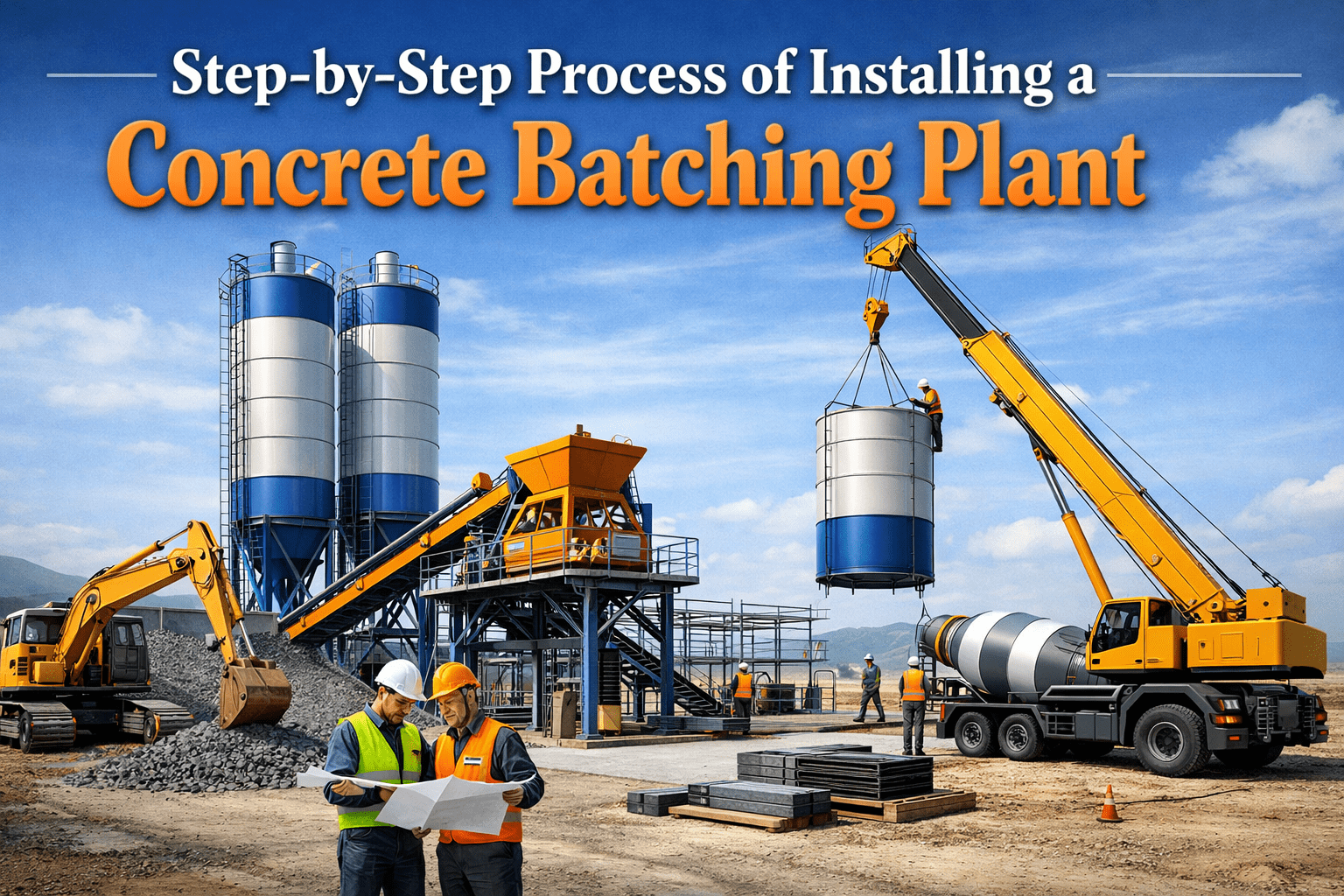
Installing a concrete batching plant is a strategic investment that directly impacts construction efficiency, project timelines, and overall profitability. Whether you’re setting up a concrete ready mix plant, a ready mix concrete plant, or a mobile concrete batching plant, proper planning and execution are essential. This guide walks you through the complete installation process to help you avoid costly mistakes and ensure smooth operations.
Step 1: Site Selection and Preparation
The first and most critical step is selecting the right location. The site should have easy access to raw materials, transportation routes, and water supply. Ensure the land is stable and spacious enough to accommodate plant components and future expansion. Proper leveling and soil testing are necessary to support heavy machinery and prevent structural issues.
Step 2: Legal Approvals and Compliance
Before installation begins, obtain all necessary permissions from local authorities. This includes environmental clearances, pollution control approvals, and zoning permits. Compliance ensures smooth operations without legal interruptions and builds credibility with clients and stakeholders.
Step 3: Choosing the Right Plant Type
Selecting the appropriate plant type depends on your project requirements. A mobile concrete batching plant is ideal for short-term or remote projects, while a stationary ready mix concrete plant suits long-term, high-volume production. Consider production capacity, automation level, and scalability before making a decision.
Step 4: Foundation Work
A strong foundation is essential for the durability and stability of your plant. This involves laying reinforced concrete bases for silos, mixers, and other heavy equipment. Accurate measurements and proper curing time are crucial to prevent vibrations and structural damage during operations.
Step 5: Equipment Delivery and Inspection
Once the foundation is ready, the equipment is delivered to the site. Carefully inspect all components such as mixers, conveyors, silos, control panels, and batching units. Ensure everything matches your order specifications and is free from damage.
Step 6: Mechanical Installation
This step involves assembling all mechanical components, including aggregate feeders, conveyor belts, cement silos, and mixing units. Proper alignment and secure fastening are essential for efficient operation and reduced wear and tear.
Step 7: Electrical Setup and Automation
Install electrical systems, wiring, and control panels. Modern plants often include automated systems for precise batching and monitoring. Ensure all connections are secure and tested for safety and efficiency.
Step 8: Water and Admixture System Installation
Water supply and admixture systems play a vital role in maintaining concrete quality. Install pumps, pipelines, and storage tanks to ensure consistent flow and accurate mixing ratios.
Step 9: Trial Run and Testing
Before full-scale production, conduct trial runs to test all systems. Check for accuracy in batching, mixing consistency, and equipment performance. Address any issues immediately to avoid future disruptions.
Step 10: Staff Training and Safety Measures
Train operators and staff on plant operations, maintenance, and safety protocols. Proper training ensures efficient handling of equipment and minimizes risks.
Step 11: Final Commissioning
After successful testing, the plant is ready for full operation. Regular monitoring and maintenance will help maintain performance and extend the lifespan of the equipment.
FAQs
Q1. What is a concrete batching plant and how does it work?
A1. A concrete batching plant is a machine used to combine raw materials like cement, aggregates, water, and admixtures to produce high-quality concrete. It works by accurately measuring each ingredient and mixing them in a controlled environment to ensure consistent output. Modern plants use automated systems for precise batching, improving efficiency and reducing human error.
Q2. What is the average concrete batching plant price in India?
A2. The concrete batching plant price in India typically ranges from ₹15 lakh to ₹1.5 crore or more, depending on factors like capacity, automation level, and plant type. Mobile plants are generally more affordable, while fully automatic stationary plants with higher production capacity cost more. Additional features and customization can also impact the final price.
Q3. Which is better: mobile concrete batching plant or stationary plant?
A3. The choice depends on your project needs. A mobile concrete batching plant is ideal for short-term or remote projects due to its portability and quick setup. In contrast, a stationary plant is better for large-scale, long-term projects requiring high production capacity and continuous operation. Both have their advantages based on usage.
Q4. How to choose reliable concrete batching plant manufacturers?
A4. To choose reliable concrete batching plant manufacturers, consider their industry experience, product quality, technology, and customer reviews. Look for suppliers who offer strong after-sales support, installation assistance, and training services. It’s also important to compare specifications, pricing, and customization options before making a final decision.