
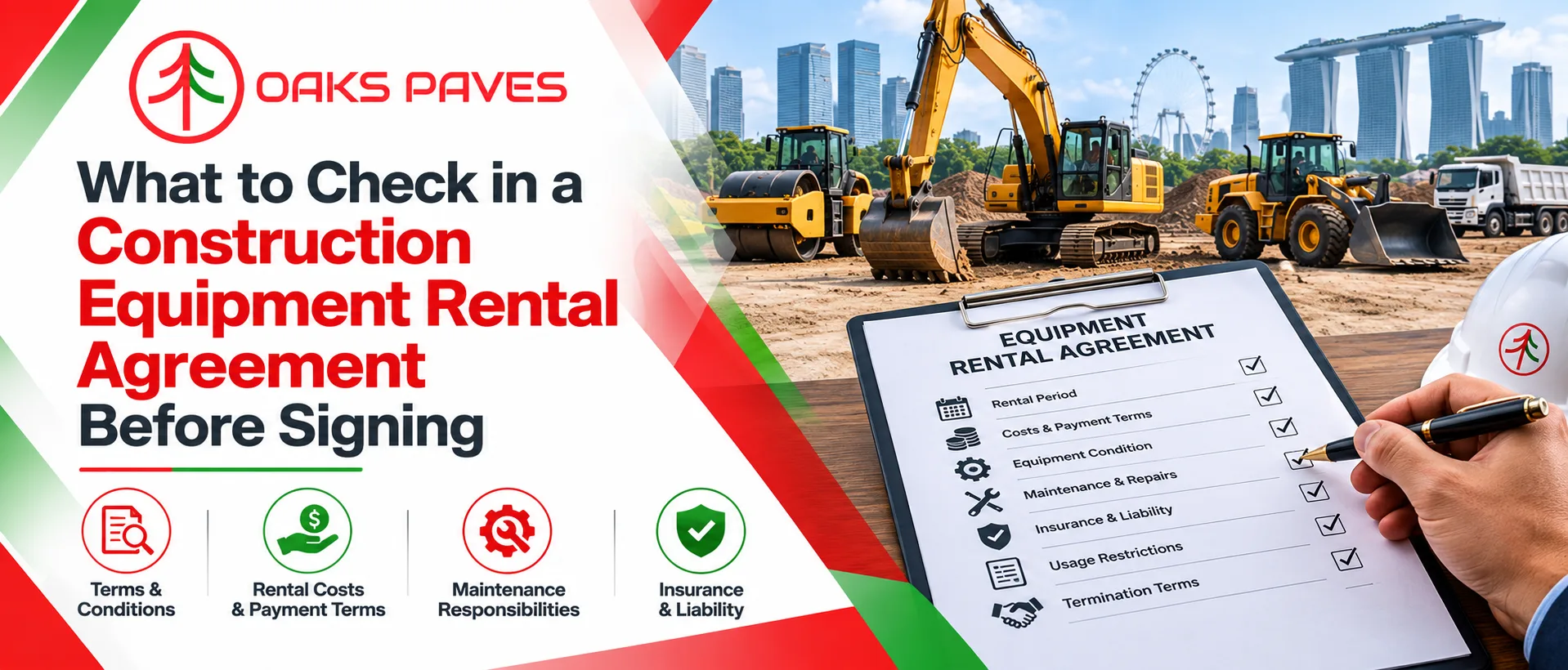
Renting construction machinery can help contractors manage project costs, access specialized equipment, and respond to changing site requirements. However, a rental agreement can also contain important conditions relating to payment, maintenance, insurance, equipment damage, and return procedures. Overlooking these details may lead to unexpected expenses, project delays, or disputes.
Before arranging construction equipment rental in Singapore, contractors should review the agreement carefully and confirm that every important responsibility is clearly documented. Whether you need an excavator for earthmoving or road construction machinery for infrastructure work, understanding the contract can help protect your budget and keep operations organised.
What Should You Check Before Signing a Construction Equipment Rental Agreement?
Before signing an equipment rental agreement, check these essential details:
- Equipment specifications: Confirm the machine model, capacity, attachments, and condition.
- Rental period: Verify the start date, end date, operating hours, and extension rules.
- Total cost: Review rental charges, deposits, transport, fuel, overtime, and additional fees.
- Maintenance and breakdowns: Establish who handles servicing, repairs, and replacement equipment.
- Insurance and liability: Understand responsibility for damage, theft, accidents, and third-party claims.
- Safety requirements: Check inspection records, operating instructions, and operator requirements.
- Delivery and return: Confirm transport arrangements, return conditions, and acceptable wear and tear.
- Termination terms: Review cancellation fees, early termination rights, and dispute procedures.
Never rely solely on a quotation or verbal promise. Make sure agreed terms are included in the written contract before signing.
1. Verify the Equipment Details and Specifications
The agreement should identify the exact equipment being rented. A general description such as “excavator” or “road roller” may not provide enough information to establish what the supplier must deliver.
Check the following details:
- Manufacturer, model, and serial number.
- Operating weight, capacity, and technical specifications.
- Including attachments, accessories, and safety equipment.
- Hour-meter reading and existing condition.
- Intended application and any usage restrictions.
- Relevant manuals, inspection documents, and service records.
For Construction Machinery Rental Singapore, matching the equipment specifications to the project is particularly important. A machine that is too large may not fit the site, while one with insufficient capacity could slow down operations.
If attachments such as buckets, breakers, or specialized tools are required, list them in the agreement. Confirm whether their use attracts additional charges and whether they are compatible with the supplied machine.
2. Understand the Rental Period and Extension Rules
Rental periods directly affect project costs. Check when billing begins, when the equipment must be returned, and whether the agreement uses daily, weekly, monthly, or hourly rates.
Clarify these points before signing:
- Exact delivery and collection dates.
- Whether the delivery day counts as a full rental day.
- Permitted operating hours and overtime charges.
- Procedures for extending the rental period.
- Notice required to cancel or shorten the rental.
- Charges for late returns or unauthorised extensions.
Heavy Equipment Rental Singapore arrangements can involve substantial costs when equipment remains on-site longer than expected. If a project schedule changes, the contractor should know whether the rental can be extended and how the revised rate will be calculated.
Ask the supplier to confirm extension terms in writing rather than assuming that an informal phone conversation changes the contract.
3. Calculate the Complete Rental Cost
The advertised rental rate may not represent the final amount payable. Additional charges can significantly affect the project budget, so request an itemised quotation before committing.
| Cost item | What to confirm |
|---|---|
| Base rental fee | Daily, weekly, or monthly rate |
| Security deposit | Amount, deductions, and refund timeline |
| Delivery and collection | Transport and mobilisation charges |
| Fuel and consumables | Who pays and what return levels apply |
| Operator charges | Whether an operator is included |
| Attachments | Additional rental or installation fees |
| Overtime | Charges for exceeding permitted hours |
| Cleaning and damage | Conditions that trigger extra fees |
| Taxes and other fees | Applicable charges and how they are calculated |
When comparing Construction Equipment Hire Singapore providers, calculate the expected total cost for the entire rental period rather than comparing only headline rates.
Also clarify payment deadlines, invoice requirements, late-payment interest, and the process for disputing an incorrect charge. Make sure the contract explains when the security deposit will be returned and what evidence supports any deductions.
4. Clarify Maintenance and Breakdown Responsibilities
Equipment breakdowns can disrupt schedules, increase labour costs, and delay dependent activities. The agreement should clearly allocate responsibility for routine maintenance, repairs, and reporting faults.
Ask the supplier:
- Who performs scheduled servicing?
- Who is responsible for repairs caused by normal wear?
- What happens if the machine develops a mechanical fault?
- How quickly will technical support be provided?
- Is replacement equipment available if a major breakdown occurs?
- Will rental charges continue while the machine is unusable?
These details are important for Excavator Rental Singapore and other machinery used in time-sensitive operations.
The agreement should distinguish normal wear and tear from damage caused by misuse, negligence, or failure to follow operating instructions. It should also explain who can authorise repairs and whether the renter may appoint an external repair provider.
Before accepting delivery, inspect the machine and document any existing damage. Photographs, inspection reports, and signed handover records can help prevent disputes when the equipment is returned.
5. Review Insurance, Damage, and Liability Clauses
Insurance and liability provisions deserve careful attention because construction machinery can cause significant property damage or personal injury if an incident occurs.
Do not assume that the supplier’s insurance automatically covers every risk associated with renting the equipment.
Check:
- Whether equipment damage and theft are covered.
- Whether third-party liability coverage is required.
- Which party must arrange each policy.
- Applicable deductibles and exclusions.
- Who is responsible for damage during transport.
- How incidents must be reported.
- Whether liability is limited or allocated differently for specific events.
Ask for clarification if the agreement uses broad indemnity language or makes the renter responsible for losses that may be outside its control. Understand the financial consequences before accepting these obligations.
For expensive or high-risk equipment, consider having a qualified legal adviser review the insurance and liability clauses before signing.
6. Check Safety, Inspection, and Operator Requirements
A rental agreement should identify relevant safety obligations and specify who must provide operating instructions, equipment documentation, and required inspections.
Singapore’s Ministry of Manpower explains that workplace occupiers and machinery owners have responsibilities concerning machinery safety under the Workplace Safety and Health framework. Certain categories of equipment are subject to additional inspection or examination requirements. Requirements depend on the machinery and its intended use.
Before accepting the equipment, confirm that:
- Required inspections and documentation are current.
- Safety guards and protective systems are present.
- Manuals and operating instructions are available.
- Operators have the necessary training and authorisation.
- Site-specific risks and operating restrictions are understood.
- Responsibility for daily checks is clearly allocated.
For Road Construction Equipment Rental Singapore, also assess site access, ground conditions, traffic management, and the space required for safe equipment movement.
Do not operate machinery that appears unsafe or has unresolved defects. Report concerns to the supplier and follow the applicable site safety procedures.
7. Confirm Delivery, Collection, and Return Conditions
Delivery and return arrangements can affect both cost and project scheduling. The agreement should state where the machine will be delivered, who will unload it, and what access conditions the renter must provide.
Confirm whether transport charges change according to distance, delivery timing, or special handling requirements. If a machine requires ramps, lifting arrangements, or other preparation, clarify who is responsible.
The return clause should explain:
- The required return location and deadline.
- Whether the equipment must be cleaned or refueled.
- The inspection process at collection.
- Acceptable wear and tear.
- How damage claims will be documented.
- The timeline for deposit refunds.
Take photographs and record the machine’s condition when it arrives and when it is collected. Retain signed handover documents and any communication about defects or damage.
8. Read Cancellation, Termination, and Dispute Clauses
Project requirements can change because of weather, access restrictions, client decisions, or delays in other work. The contract should explain what happens if you need to cancel, return equipment early, or extend the rental unexpectedly.
Review minimum rental periods, cancellation deadlines, early termination fees, and the consequences of non-payment. Check whether the supplier can terminate the agreement and recover equipment, and what notice or procedure applies.
The agreement should also establish how disputes will be handled, including the process for raising a complaint, supporting a claim with evidence, and resolving disagreements.
For Construction Equipment Rental Services Singapore, request written confirmation of any negotiated changes. If a clause is unclear, ask for a revised version before signing instead of relying on an informal assurance.
Conclusion
Reviewing a construction equipment rental agreement before signing can help contractors avoid unexpected expenses, clarify responsibilities, and reduce the risk of project disruption. Pay particular attention to equipment specifications, rental dates, total costs, maintenance, insurance, safety, and return conditions.
At Oaks Paves Pte Ltd, contractors can discuss their machinery requirements and clarify the rental terms applicable to their projects before making a commitment.
A careful review, written confirmation of important promises, and proper equipment handover records provide a stronger foundation for a successful rental arrangement. If a clause is unclear or exposes your business to significant risk, seek clarification or professional advice before signing.
Frequently Asked Questions
Q1. What is the most important clause in a construction equipment rental agreement?
There is no single clause that matters in every situation. Equipment specifications, total costs, maintenance responsibilities, insurance, liability, and return conditions should all be reviewed carefully.
Q2. Should I inspect rented equipment before signing?
Yes. Inspect the equipment before accepting it whenever possible. Record existing damage, verify attachments, and confirm that required safety features and documents are available.
Q3. Who pays for equipment repairs during the rental period?
The agreement determines responsibility. Routine maintenance, normal wear, mechanical breakdowns, and damage caused by misuse may be treated differently. Confirm these terms in writing.
Q4. What should I compare when choosing a rental provider in Singapore?
Compare equipment suitability, availability, condition, total rental cost, delivery, maintenance support, breakdown response, insurance terms, and contract flexibility.
Q5. Should a lawyer review a construction equipment rental agreement?
For high-value machinery, complex liability terms, long rental periods, or significant project risks, professional legal review can help identify unclear obligations and potential exposure.