
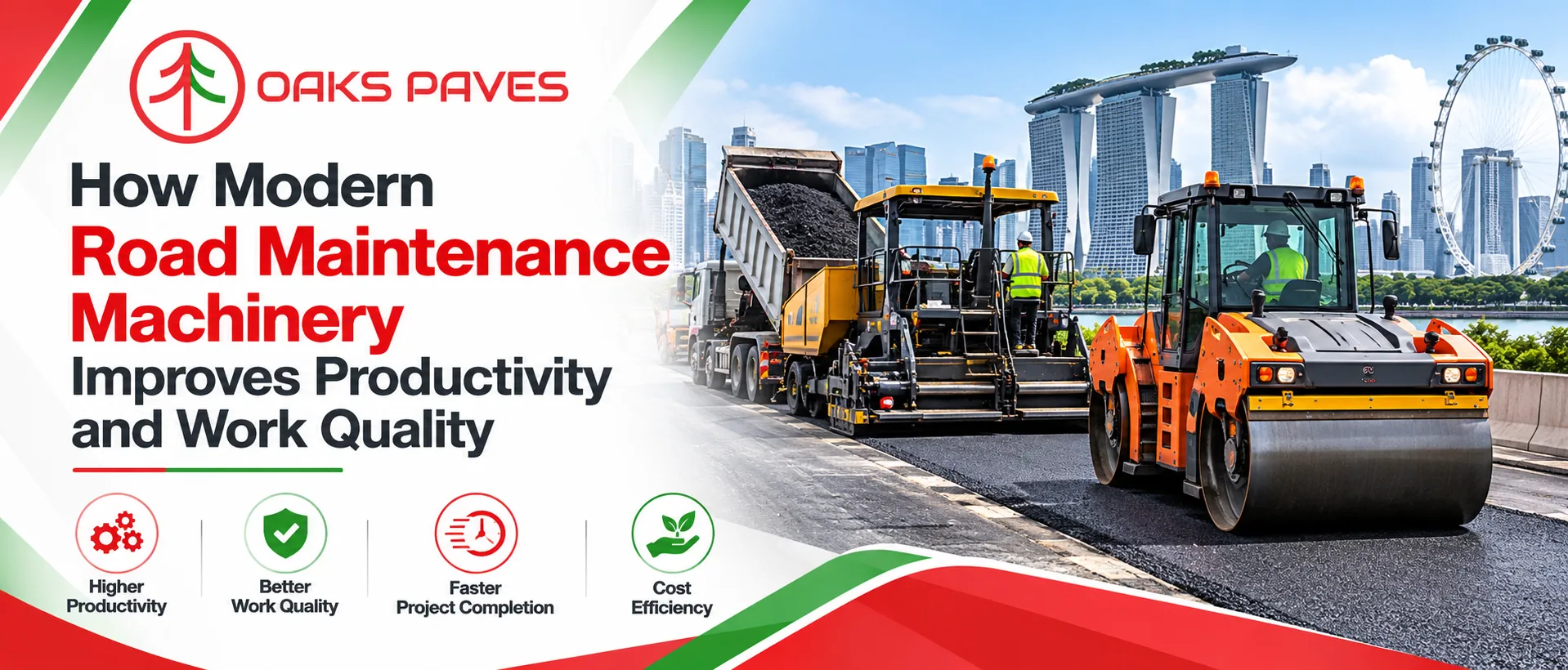
Road networks require regular maintenance to remain safe, smooth, and reliable. From repairing potholes and resurfacing worn asphalt to improving pavement durability, every maintenance task depends on suitable machinery, skilled operators, and proper work planning. Outdated equipment or inefficient methods can increase repair time, create inconsistent surfaces, and lead to expensive rework.
Modern road maintenance machinery helps contractors complete these tasks more efficiently by improving material handling, repair precision, compaction, and quality control. For contractors searching for Road Maintenance Equipment Singapore, understanding how different machines contribute to productivity and work quality can help them make better equipment decisions.
How Does Modern Road Maintenance Machinery Improve Productivity?
Modern road maintenance machinery improves productivity by helping teams complete repairs faster, handle materials efficiently, and achieve more consistent pavement quality.
Key benefits include:
- Faster repairs: Milling machines, asphalt pavers, and compactors streamline different stages of roadwork.
- Improved surface quality: Controlled paving and compaction help create smoother, more uniform surfaces.
- Reduced rework: Accurate material placement and appropriate compaction can minimise avoidable defects.
- Better resource utilisation: Mechanised operations help coordinate equipment, workers, and materials.
- Improved worksite safety: Suitable machinery can reduce some manual handling tasks and support safer work practices.
- More informed maintenance: Inspection technology helps identify road defects and prioritise repairs.
The best results depend on choosing machinery suited to the project, maintaining it properly, and following approved construction methods and quality requirements.
1. Faster Road Repairs and Maintenance Operations
Traditional repair methods may require considerable manual effort, particularly when projects involve extensive surface damage or large areas of asphalt. Modern machinery can streamline several stages of the maintenance process, from removing damaged pavement to placing and compacting replacement material.
For example, a cold planer can remove deteriorated asphalt to a controlled depth, helping prepare the surface for resurfacing. Asphalt pavers distribute material more consistently, while rollers compact the newly laid layer.
Using the appropriate equipment for each stage helps contractors coordinate operations and reduce unnecessary delays between tasks. However, overall productivity also depends on site access, traffic management, weather, material delivery, and operator experience.
For Road Maintenance Services Singapore, efficient coordination is particularly valuable when work must be completed while minimising disruption to road users.
2. Better Asphalt Placement and Surface Quality
The quality of an asphalt road depends on more than the material itself. Surface preparation, temperature control, layer thickness, placement, and compaction all influence the finished result.
Modern paving equipment helps distribute asphalt evenly across the required width. This supports consistent layer thickness and reduces irregularities caused by uneven manual placement. Properly selected rollers then compact the asphalt to achieve the specified density and surface finish.
During Asphalt Road Maintenance Singapore projects, contractors should ensure that equipment settings, paving speed, material temperature, and compaction procedures match the project specifications.
Consistent processes can help reduce common construction problems, such as uneven surfaces, poorly compacted areas, and premature deterioration. Machinery alone cannot guarantee a durable road, but suitable equipment combined with competent workmanship improves the likelihood of achieving the required quality.
3. Choosing the Right Machinery for Different Repair Tasks
Different road defects require different maintenance approaches. Selecting the correct machine helps avoid unnecessary work and supports a more efficient repair process.
Cold Planers and Milling Machines
Cold planers remove damaged or worn pavement before resurfacing. They can help establish a consistent surface profile and prepare the road for a new asphalt layer. The appropriate machine size and cutting depth depend on the pavement condition and project requirements.
Asphalt Pavers
Asphalt pavers distribute hot-mix asphalt across the prepared surface. Their operating width, paving capacity, and adjustment features should match the project’s scale and required finish.
Asphalt Rollers and Compactors
Rollers compact asphalt and other suitable materials to achieve specified density and surface characteristics. Different roller types serve different functions, so the equipment sequence and number of passes should follow the project’s technical requirements.
Small Compaction Equipment
Plate compactors and other compact machines are useful for confined spaces, edges, and smaller reinstatement works where larger rollers may be impractical.
Choosing suitable Road Repair Equipment Singapore requires consideration of the repair type, working space, pavement structure, expected workload, and access restrictions.
4. Reducing Rework and Improving Long-Term Value
Poorly executed maintenance can lead to repeated repairs, additional labour costs, wasted materials, and further disruption. Modern machinery can help reduce these risks by making operations more controlled and repeatable.
Accurate milling supports appropriate surface preparation. Consistent paving helps control material distribution, and suitable compaction equipment helps achieve specified pavement density. When these stages are coordinated properly, contractors can reduce the likelihood of defects associated with inconsistent workmanship.
Quality checks remain essential. Teams should inspect the prepared surface, monitor asphalt placement, verify compaction where required, and document completed work. If a defect is identified, it should be corrected before the project moves to the next stage whenever practical.
For Road Construction Equipment Singapore buyers, long-term value should therefore be evaluated through productivity, operating costs, maintenance requirements, reliability, and the equipment’s suitability for the intended applications not simply its purchase price.
5. Using Technology to Improve Maintenance Planning
Modern road maintenance increasingly combines machinery with inspection and data-management technology. Road condition assessments can help teams identify defects, determine repair priorities, and plan maintenance before deterioration becomes more extensive.
Singapore’s Land Transport Authority has described using artificial intelligence and video analytics to identify visible road defects, alongside specialised equipment for measuring pavement characteristics such as cracking, roughness, skid resistance, and structural integrity. Its published information also reports productivity improvements from adopting technology-assisted inspection processes.
For contractors, digital inspection records and maintenance logs can support better planning by helping teams understand which areas require attention, which machines are needed, and how resources should be allocated.
Combining suitable inspection technology with effective repair equipment can make maintenance more targeted and help avoid unnecessary work. Nevertheless, technology must be supported by trained personnel and appropriate engineering decisions.
6. Improving Worksite Safety and Efficiency
Road maintenance often takes place near moving traffic, pedestrians, workers, and other construction activities. Efficient equipment operation and well-organised work zones are therefore important for both productivity and safety.
Mechanised equipment can reduce certain repetitive manual tasks, but it introduces its own risks, including moving machinery, blind spots, reversing operations, hot asphalt, and noise.
Contractors should implement suitable traffic management, equipment inspections, operator training, protective equipment, and clear communication between workers. Machinery should be operated according to manufacturer instructions and applicable site safety requirements.
A well-planned sequence of work can also reduce equipment congestion and unnecessary movement around the site. These measures help teams work more systematically while protecting workers and road users.
7. How to Select Road Maintenance Machinery for Your Project
Before purchasing or hiring machinery, contractors should assess the project’s requirements and the equipment’s expected working conditions.
Consider the following factors:
- Project size: Choose capacity and operating width appropriate for the road length and work volume.
- Type of repair: Determine whether the project requires milling, asphalt placement, compaction, recycling, or small-area repairs.
- Operating environment: Consider access restrictions, traffic conditions, available working space, and site layout.
- Performance and reliability: Review productivity, service requirements, spare-part availability, and technical support.
- Operator requirements: Confirm that trained operators are available for the selected machinery.
- Total operating cost: Include fuel or energy, maintenance, transport, downtime, and any hiring costs.
- Quality requirements: Ensure that the equipment can support the specified surface finish, compaction, and project standards.
At Oaks Paves Pte Ltd, contractors exploring road maintenance and construction machinery can discuss their project requirements and identify suitable equipment options for their intended applications.
Conclusion
Modern road maintenance machinery helps contractors improve productivity and work quality by streamlining repairs, supporting consistent asphalt placement, improving compaction, and reducing avoidable rework. When combined with inspection technology, trained operators, effective planning, and appropriate quality checks, these machines can contribute to more efficient and reliable road maintenance.
The most suitable equipment is the one that matches the project’s technical requirements, operating conditions, and long-term budget. Careful selection and proper maintenance help contractors make better use of their machinery while delivering roadwork that meets the required standards.
Frequently Asked Questions
Q1. What equipment is commonly used for road maintenance?
Common equipment includes cold planers, asphalt pavers, rollers, compactors, and smaller repair machines. The correct selection depends on the type of defect, repair method, site conditions, and project specifications.
Q2. How does modern road maintenance machinery improve productivity?
It helps streamline pavement removal, asphalt placement, compaction, and material handling. Proper equipment selection and coordination can reduce unnecessary delays and improve consistency.
Q3. Why is compaction important in asphalt road maintenance?
Compaction helps achieve the required pavement density and surface characteristics. Inadequate or inconsistent compaction may contribute to premature pavement deterioration, so suitable equipment and quality checks are essential.
Q4. How should contractors choose road repair equipment in Singapore?
They should assess the project size, repair requirements, site access, machine capacity, operating costs, service support, and applicable technical standards before selecting equipment.
Q5. Can modern machinery eliminate road maintenance defects?
No. Machinery can improve process control and consistency, but results also depend on material quality, design, site preparation, weather, operator skill, and inspection procedures.