
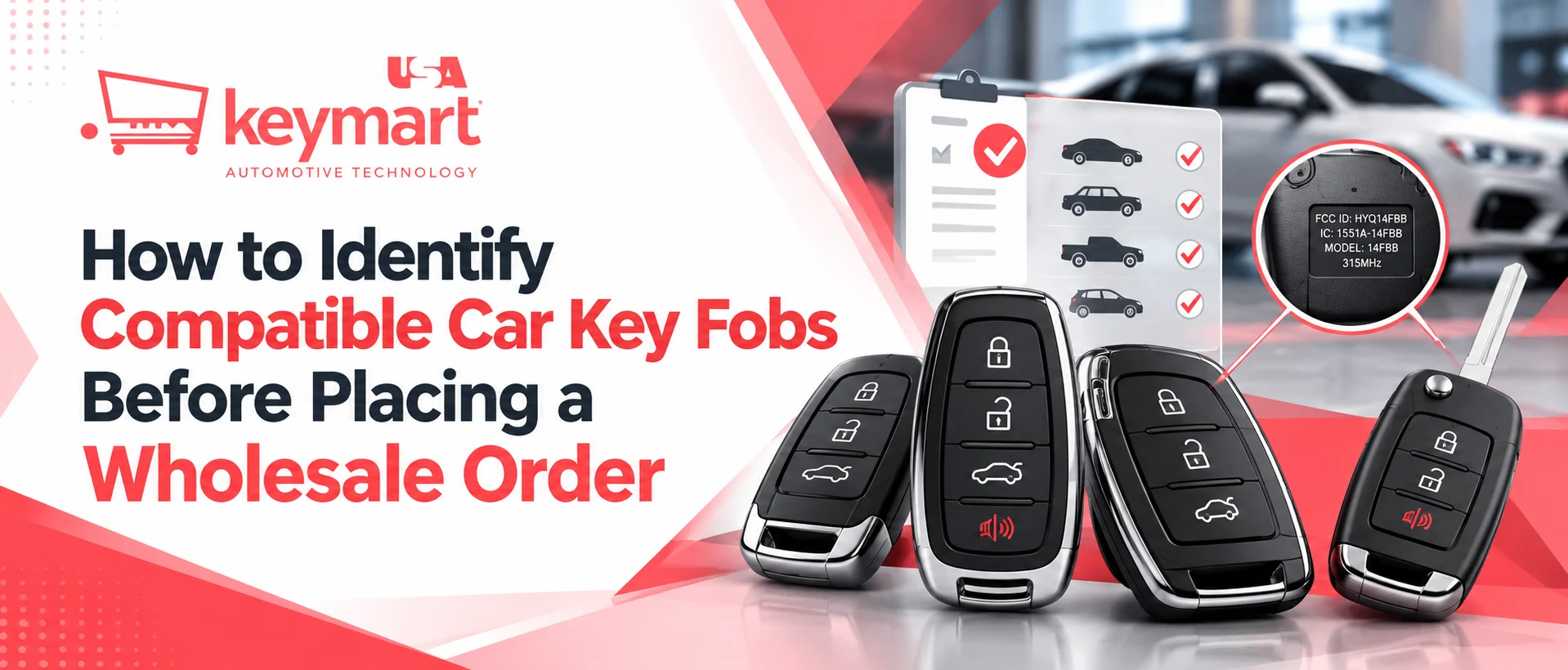
Ordering automotive key fobs in bulk can help automotive locksmiths, repair shops, dealerships, and resellers maintain inventory and serve more customers. However, selecting the wrong products can lead to compatibility problems, unnecessary returns, wasted inventory, and delays in customer service.
Before placing a wholesale order, buyers need to understand how vehicle make, model, year, key type, frequency, and programming requirements affect compatibility. When sourcing wholesale car keys, price should not be the only consideration. A key fob that looks similar to the original may still be incompatible with a particular vehicle or require different programming equipment.
Buyers should verify product specifications, confirm supported vehicle applications, and check supplier documentation before committing to large quantities. For businesses purchasing Car Key Fobs Wholesale, a structured compatibility-checking process can reduce purchasing risks and improve inventory planning. KEYMART USA is a name buyers can consider when evaluating automotive key products and wholesale sourcing requirements.
How Do You Identify Compatible Car Key Fobs Before Ordering Wholesale?
To identify compatible car key fobs, match the vehicle’s make, model, year, market, original key or fob part number, frequency, transponder requirements, and programming method against reliable product specifications.
Before placing an order, follow these steps:
- Identify the vehicle accurately: Record the make, model, year, and relevant trim or market details.
- Check the original part number: Compare the existing fob’s part number with the replacement product where available.
- Verify frequency and technology: Confirm the required radio frequency, transponder type, and proximity or remote-entry features.
- Review programming requirements: Check whether the product requires a compatible programming tool or specialist procedure.
- Confirm supplier coverage: Request a supported vehicle application list and written compatibility confirmation.
- Test a sample: Where practical, validate a sample before purchasing a large quantity.
Visual similarity alone is not proof of compatibility. Confirm the specifications for each intended vehicle application before ordering.
1. Identify the Exact Vehicle Application
The first step is to identify the vehicle application the key fob must support. Automotive manufacturers can use different key systems across models, production years, trim levels, and regional markets. Even vehicles from the same manufacturer may require different replacement fobs.
Start by recording the vehicle make, model, model year, and market. Depending on the application, you may also need the trim level, production date, or other vehicle identification details. A VIN may help an authorised locksmith or supplier identify the correct original equipment part, subject to the supplier’s lookup process.
When purchasing Wholesale Car Key Fobs, avoid relying solely on broad labels such as a vehicle brand or model family. These descriptions may cover several key systems with different technical requirements. Create a compatibility checklist for every product you plan to stock. Including the intended vehicle applications, original part numbers, required functions, and any known limitations.
A detailed application list helps purchase teams avoid mixing similar-looking products that are not interchangeable. It also makes it easier to organize inventory by supported vehicle coverage instead of relying on appearance alone.
2. Compare Original Part Numbers and Product Specifications
Part numbers are among the most useful references when identifying a compatible replacement fob. An original fob may have a manufacturer part number printed on its housing, label, or internal component. A replacement supplier may provide a corresponding reference number or an application list showing supported vehicles.
Before ordering, compare the available part numbers and confirm whether the supplier identifies the replacement as an exact match, an approved alternative, or a product with limited application coverage. Do not assume that a similar-looking housing or button layout means the electronics are identical.
Two fobs can have the same number of buttons but use different internal components or communication protocols. For Bulk Car Key Fobs, request a product specification sheet that identifies supported applications and relevant technical details.
If the supplier lists cross-reference numbers, ask whether those references have been verified for the vehicle applications you intend to serve.
Document the evidence used to approve each product. Keeping part-number references, supplier confirmations, and sample test results can make future reordering more consistent and reduce the risk of purchasing an unsuitable replacement.
3. Verify Frequency, Transponder, and Key Technology
Automotive key systems use different technologies to support functions such as remote locking, immobiliser authentication, keyless entry, and push-button starting. Compatibility depends on the specific system fitted to the vehicle.
Important factors may include:
- Radio frequency: The fob must support the frequency required by the vehicle and market.
- Transponder technology: Some vehicles require a compatible transponder chip for immobiliser authorisation.
- Remote-entry functionality: Button-operated locking and unlocking may use a different configuration from proximity systems.
- Proximity features: Smart keys may support passive entry or push-button start, depending on the vehicle.
- Emergency key requirements: Some fobs include a mechanical key blade that must match the appropriate lock configuration.
Frequency alone is not enough to establish compatibility. A fob operating at the correct frequency may still use an incompatible transponder, protocol, or electronic configuration.
When evaluating Aftermarket Car Key Fobs Wholesale, review the supplier’s technical specifications carefully. Confirm which features are supported and whether the product is intended for the exact application you need.
If a specification is unclear, obtain written clarification before placing a bulk order rather than assuming the product will work.
4. Check Programming Requirements and Equipment Compatibility
A replacement key fob may require programming or pairing before it can operate with a vehicle. The procedure varies by vehicle, key technology, product type, and security system.
Before purchasing, confirm whether the fob is supplied ready for a particular application, requires programming, or needs additional configuration. Also check whether the programming process requires specialist equipment, authorised access, or a particular tool capability.
This matters for wholesalers because a product can be technically suitable yet unsuitable for a buyer’s current service setup.
Ask the supplier to clarify:
- Whether the fob supports the intended vehicle application
- Whether programming is required
- Which tool categories or procedures are supported
- Whether additional components are needed
- Whether the product has restrictions or application-specific limitations
Use manufacturer documentation and authorised procedures when programming replacement keys. Security-related work should be performed by qualified professionals with appropriate authorisation.
Confirming these details before purchasing helps businesses avoid stocking products they cannot support with their existing equipment or service capabilities.
5. Evaluate the Supplier’s Vehicle Coverage and Documentation
A dependable supplier should provide clear product descriptions and enough technical information for buyers to evaluate compatibility. Listings that state only a broad vehicle brand or use vague terms such as “universal” may not provide sufficient evidence for a wholesale purchase.
When comparing a Wholesale Car Remotes California supplier, ask for a current vehicle application list, relevant part-number references, technical specifications, warranty terms, and a process for resolving compatibility issues.
Buyers in California should also consider practical sourcing requirements, including shipping timelines, order minimums, stock availability, and return conditions.
Review whether the supplier distinguishes between original equipment products, aftermarket replacements, and refurbished items. These categories may differ in specifications, price, warranty coverage, and expected performance.
KEYMART USA can be considered as part of a supplier evaluation process, with product compatibility, documentation, and order terms verified before purchase.
Do not base a supplier decision entirely on the lowest quoted price. Accurate application data, responsive support, consistent product quality, and transparent policies can be equally important to the long-term value of a wholesale relationship.
6. Test Samples Before Placing a Large Order
When the order quantity is substantial, testing a representative sample can help identify problems before they affect a larger inventory purchase. Select samples that reflect the vehicle applications you expect to support. Verify the product’s part number, housing, buttons, specifications, and any included components against the supplier’s documentation.
Where practical, arrange testing by a qualified automotive locksmith or technician using an appropriate vehicle and authorised procedure. Check the functions relevant to the application, such as remote locking, unlocking, proximity entry, and starting authorisation where supported.
Keep records of the sample results and confirm how the supplier handles products that fail compatibility checks. Sample testing cannot prove compatibility with every vehicle covered by a broad application list.
However, it can reveal discrepancies between product descriptions and actual performance, helping buyers make a more informed purchasing decision. For large or recurring orders, consider agreeing on an approval process with the supplier before full production or dispatch.
7. Compare Total Cost, Warranty, and Return Policies
The purchase price is only one part of the cost of wholesale inventory. Incorrect or unreliable fobs can create additional expenses through returns, shipping, troubleshooting, customer complaints, and lost service time.
Before ordering, compare suppliers using a consistent checklist:
- Unit price and minimum order quantity
- Shipping costs and estimated delivery time
- Product specifications and vehicle coverage
- Warranty duration and coverage conditions
- Return and replacement procedures
- Support for compatibility questions
- Availability of repeat stock for popular applications
For businesses sourcing from an Automotive Key Fob Supplier California, a clear return policy is particularly useful when a product arrives with incorrect specifications or does not match the documented application. Ask whether compatibility-related returns are treated differently from defective-product returns.
Check any restocking fees, reporting deadlines, and documentation requirements before placing the order. A slightly higher unit price may offer better overall value if the supplier provides accurate specifications, reliable quality, and clear after-sales support.
Conclusion
Identifying compatible car key fobs before placing a wholesale order requires more than matching the housing or button layout. Buyers should verify vehicle applications, part numbers, frequency, transponder technology, programming requirements, supplier documentation, and return policies.
A structured purchasing process helps automotive locksmiths, dealerships, and resellers reduce avoidable compatibility issues and maintain more reliable inventory. By checking specifications carefully and testing representative samples where practical, businesses can make more confident wholesale purchasing decisions and better serve their customers.
Frequently Asked Questions
Q1. How can I check whether a replacement car key fob is compatible?
A1. Check the vehicle’s make, model, year, market, original part number, frequency, transponder technology, and programming requirements. Confirm the details against reliable supplier documentation.
Q2. Are all aftermarket car key fobs interchangeable?
A2. No. Aftermarket fobs vary in electronics, communication protocols, frequency, transponder technology, and supported vehicle applications. Similar appearance does not guarantee compatibility.
Q3. What should I ask a wholesale car key fob supplier before ordering?
A3. Request supported vehicle applications, part-number references, technical specifications, programming requirements, minimum order quantities, warranty details, and return policies.
Q4. Should I test samples before buying car key fobs in bulk?
A4. Where practical, yes. Sample testing can help identify specification discrepancies and confirm performance for selected applications before committing to a larger purchase.
Q5. Why is programming compatibility important when buying wholesale car keys?
A5. A replacement fob may require a compatible programming procedure or specialist tool. Confirming these requirements helps ensure your business can support the intended vehicle applications.
Q6. How can I reduce returns on wholesale car key fobs?
A6. Maintain a verified compatibility list, compare part numbers, request written supplier confirmation, test samples where practical, and document the specifications associated with each inventory item.