
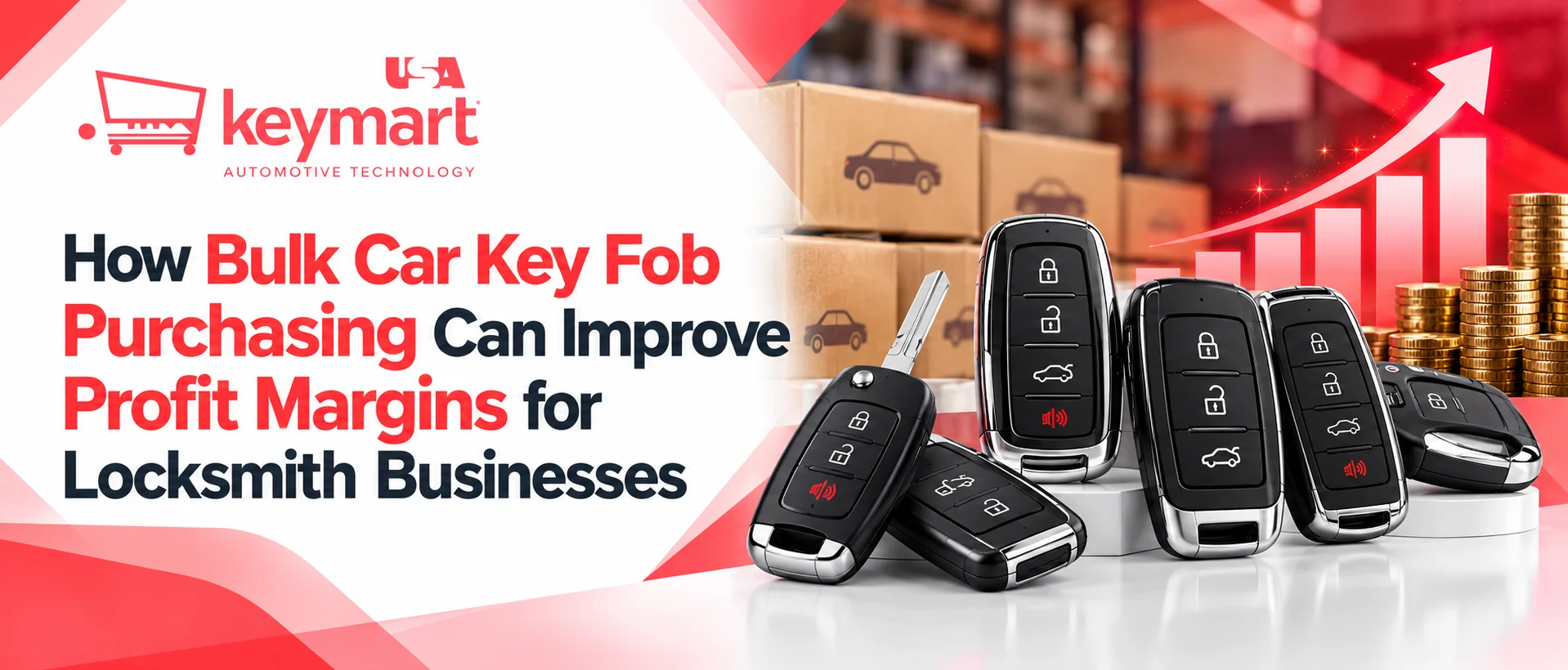
Automotive locksmith businesses need to balance competitive pricing, reliable service, and inventory costs to maintain healthy profit margins. Replacement car key fobs are an important part of this equation because customers expect quick solutions when their keys are lost, damaged, or no longer working. Keeping suitable products available can help locksmiths complete jobs efficiently, while purchasing inventory at the right cost can improve profitability.
Buying wholesale car keys can reduce the average unit cost compared with frequent small purchases, depending on order quantities, supplier pricing, shipping, and product requirements. However, bulk purchasing works best when businesses understand vehicle compatibility, local customer demand, stock turnover, and the risks of holding slow-moving inventory.
For locksmiths, the goal is not simply to buy more products. It is to purchase the right key fobs at a sustainable cost, minimise waste, and maintain enough inventory to serve customers effectively. KEYMART USA is a name businesses can consider when evaluating automotive key products and wholesale sourcing options.
How Can Bulk Car Key Fob Purchasing Improve Profit Margins?
Bulk purchasing can improve locksmith profitability by lowering the average cost per key fob, reducing repeat ordering expenses, and helping businesses keep frequently requested products available.
Key benefits include:
- Lower unit costs: Suppliers may offer volume-based pricing for qualifying orders.
- Fewer repeat orders: Consolidated purchasing can reduce administrative effort and some shipping expenses.
- Better stock availability: Popular compatible fobs can be available when customers need them.
- More consistent pricing: Planned purchasing can help businesses calculate service prices more accurately.
- Improved purchasing efficiency: Fewer emergency orders may reduce avoidable procurement costs.
- Stronger inventory planning: Sales data can help locksmiths invest in products with proven demand.
Bulk purchasing does not guarantee higher profits. Savings depend on supplier terms, product quality, compatibility, inventory turnover, and the amount of capital tied up in stock.
1. Reduce the Average Cost of Each Key Fob
One of the main advantages of buying car key fobs in bulk is the possibility of obtaining a lower price per unit. Suppliers may offer tiered pricing based on order quantity, product category, or the value of a purchase. For example, a locksmith who regularly buys a particular compatible fob individually may pay more per unit than a business that orders several units together.
The actual savings depend on the supplier’s pricing structure and any additional costs. When comparing Car Key Fobs Wholesale options, calculate the landed cost rather than looking only at the listed unit price. Include shipping, taxes, import charges where applicable, and other purchasing expenses.
A simple calculation can help:
Landed cost per unit = Total purchase and delivery costs ÷ Number of usable units received
This figure provides a more realistic basis for setting service prices and estimating gross profit.
However, ordering larger quantities is not automatically better. A lower unit price can become a poor investment if many products remain unused or prove unsuitable for the vehicles your customers own. Purchase quantities should reflect realistic demand and available storage.
2. Focus on High-Demand Vehicle Applications
A profitable inventory strategy begins with understanding which vehicles and key fob types customers commonly request. Locksmiths may serve particular vehicle brands, model years, or customer segments more frequently than others.
Review completed jobs, sales records, customer inquiries, and previous purchasing history to identify repeat demand. This information can help determine which compatible fobs deserve a larger share of the purchasing budget.
When purchasing Wholesale Car Key Fobs, avoid selecting products based only on popularity claims or broad vehicle coverage descriptions. Confirm part numbers, vehicle applications, frequency, transponder technology, and programming requirements before ordering.
Consider dividing inventory into three categories:
- Fast-moving products: Frequently requested compatible fobs that may justify higher stock levels.
- Moderate-demand products: Items that should be stocked in controlled quantities.
- Slow-moving products: Rarely requested products that may be better sourced when needed.
This approach can improve stock availability without tying up too much capital in items that may remain unused.
3. Compare Suppliers to Improve Purchasing Value
Supplier selection affects product cost, reliability, stock availability, and the time needed to resolve problems. The lowest quoted price may not provide the best overall value if the products have unclear specifications or the supplier offers limited support.
When evaluating an Automotive Key Fob Supplier in California, compare the following:
- Wholesale pricing and minimum order quantities
- Product specifications and vehicle application lists
- Shipping fees and delivery estimates
- Warranty terms and return procedures
- Availability of repeat stock
- Responsiveness to compatibility questions
- Clarity about original, aftermarket, or refurbished products
Request written clarification when a product’s compatibility is uncertain. A supplier should provide enough information for you to determine whether the item meets your intended application requirements.
KEYMART USA can be considered during supplier research, alongside other suitable vendors. Compare current product details, pricing, policies, and availability before making a purchasing decision.
A reliable supplier relationship can make inventory planning easier, but businesses should still maintain independent records of product performance and customer demand.
4. Manage Inventory to Avoid Excess Stock
Bulk buying can reduce unit costs, but it also increases the risk of holding too much inventory. Unsold products tie up cash that could otherwise be used for tools, training, marketing, or daily business expenses.
To reduce this risk, create an inventory plan based on historical sales and realistic future demand. Start with the products customers request most frequently, and increase quantities gradually as purchasing patterns become clearer.
Useful inventory practices include:
- Tracking stock levels and completed jobs
- Recording which fob types sell most often
- Setting minimum and maximum stock levels
- Reviewing products that have not sold for an extended period
- Checking compatibility details before replenishment
- Using older stock appropriately before purchasing more
You can also calculate a reorder point based on typical demand and supplier lead time. This helps reduce emergency purchases without creating excessive inventory.
For rare vehicle applications, ordering when a confirmed job requires a specific product may be more cost-effective than stocking multiple units. The right balance depends on customer expectations, delivery times, and the financial resources available to the business.
5. Evaluate Aftermarket Car Key Fobs Carefully
Aftermarket products may provide additional sourcing options for locksmiths, but product selection should be based on verified compatibility and performance rather than price alone.
When comparing Aftermarket Car Key Fobs Wholesale, check the supported vehicle applications, part-number references, electronic specifications, programming requirements, and warranty conditions.
Two fobs may have similar housings and button layouts yet use different internal electronics. A product that is unsuitable for a particular vehicle can lead to additional labour, returns, customer dissatisfaction, and lost revenue.
Where practical, test representative samples using appropriate equipment and authorized procedures before committing to a large order. Keep records of the results and note any application-specific limitations.
Calculate the total cost of using each product, including the purchase price, expected handling time, and potential support or return expenses. A slightly more expensive product may offer better value if it consistently meets the documented requirements.
Quality checks and accurate inventory descriptions can help locksmiths reduce avoidable problems and protect their reputation.
6. Use Bulk Purchasing to Improve Service Availability
Customers often need replacement keys urgently, particularly when they cannot access or operate their vehicles. Having commonly requested compatible products available can help locksmiths respond more efficiently. A well-planned stock of Bulk Car Key Fobs may reduce delays caused by waiting for routine deliveries. This can support smoother job scheduling and help businesses serve repeat customers more reliably.
However, stock availability should not come at the expense of compatibility. Confirm the vehicle application and relevant technical specifications before supplying or programming a replacement fob. Organize products with clear labels and digital inventory records.
Store part numbers, compatible vehicle applications, purchase costs, quantities, and supplier details in one accessible system. This reduces the time spent searching for products and helps prevent purchasing errors.
Availability can also support better customer communication. When a compatible product is in stock, the locksmith may be able to provide a more accurate estimate of the service timeline. If the product is unavailable, communicate expected delivery times clearly rather than promising immediate completion.
7. Calculate Profit Margins Before Setting Prices
A lower purchasing cost creates an opportunity to improve gross margin, but the final result depends on the price charged and the other costs involved in completing a job. For example, consider a hypothetical key fob with a landed cost of $30 and a selling price of $60. The gross profit on the product is $30 before labour, programming equipment, travel, overhead, and other business expenses.
Gross margin is calculated as:
Gross margin (%) = (Selling price − Cost of goods sold) ÷ Selling price × 100
Using the example above, the product gross margin is 50%. This is not the same as net profit, which accounts for additional business expenses.
When buying wholesale, compare the expected margin at different order quantities. Include the risk of damaged, incompatible, or unsold stock when estimating the true benefit.
Avoid reducing customer prices automatically when purchasing costs fall. Instead, consider your operating expenses, local competition, service quality, and the value provided to customers when deciding how to price a job.
Conclusion
Bulk car key fob purchasing can help locksmith businesses improve purchasing efficiency, lower average unit costs, and keep frequently requested products available. The greatest benefits come from combining volume-based purchasing with accurate compatibility checks, reliable suppliers, and disciplined inventory management.
Before increasing order quantities, review actual customer demand, calculate landed costs, and compare supplier terms. Track gross margins and inventory turnover to determine whether bulk purchasing is delivering measurable value. A carefully planned approach can help locksmiths protect working capital, reduce avoidable purchasing errors, and support sustainable business profitability.
Frequently Asked Questions
Q1. How can wholesale car keys improve locksmith profitability?
A1. Wholesale purchasing may reduce the average unit cost, improve product availability, and reduce repeat ordering expenses. Profitability depends on demand, compatibility, supplier terms, and inventory turnover.
Q2. Is buying car key fobs in bulk always cheaper?
A2. Not necessarily. Volume discounts may reduce unit prices, but shipping, storage, unsold inventory, and product compatibility issues can offset the savings. Compare the total landed cost before ordering.
Q3. What should locksmiths check before ordering wholesale car key fobs?
A3. Verify vehicle applications, part numbers, frequency, transponder technology, programming requirements, product specifications, warranty terms, and return policies.
Q4. How should a locksmith decide which key fobs to stock?
A4. Use completed job records, sales history, customer enquiries, and supplier lead times to identify high-demand products. Keep lower quantities of slow-moving items and review stock regularly.
Q5. Are aftermarket car key fobs suitable for wholesale purchasing?
A5. They can be suitable when their specifications, supported applications, quality, and programming requirements are verified. Test representative samples where practical before committing to a large order.
Q6. How can locksmiths measure the financial benefit of bulk purchasing?
A6. Compare the landed unit cost, gross profit, gross margin, inventory turnover, return costs, and total purchasing expenses before and after changing order quantities.