
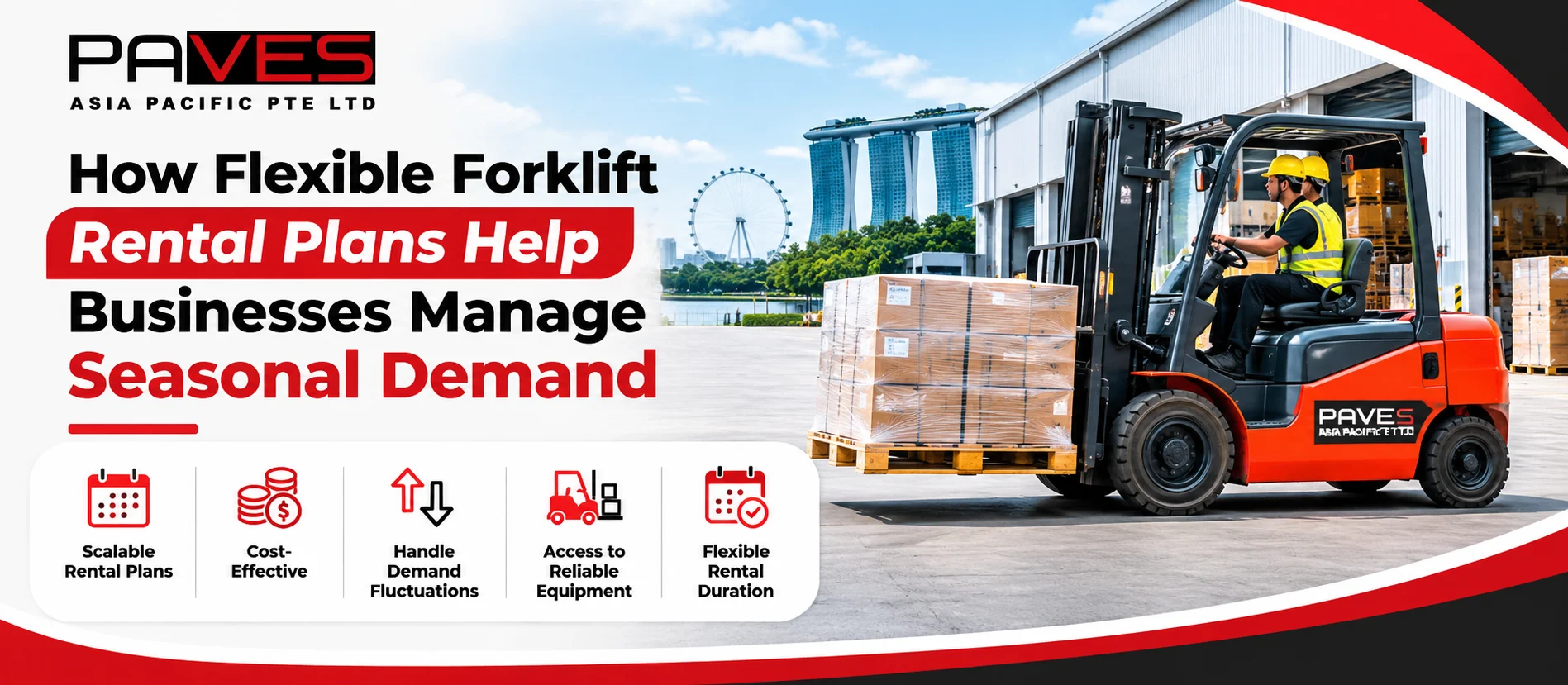
Seasonal demand can create significant operational challenges for businesses that depend on material handling, warehousing, logistics, and distribution. During busy periods, companies may need additional forklifts to manage increased inventory, speed up loading and unloading, and maintain efficient warehouse operations. However, purchasing extra equipment for a temporary increase in workload can require substantial capital investment.
Flexible Forklift Rental Services in Singapore offer businesses a practical way to adjust their equipment capacity according to changing operational requirements. Instead of purchasing forklifts that may remain underutilised during quieter months, businesses can choose rental arrangements that suit their workload, project duration, and budget.
Whether a company needs additional equipment for a few weeks, several months, or a longer period, the right rental arrangement can help maintain productivity while controlling equipment costs.
How Do Flexible Forklift Rental Plans Help Manage Seasonal Demand?
Flexible forklift rental plans allow businesses to increase or reduce their material-handling capacity according to seasonal workload changes without committing to permanent equipment purchases.
Key benefits include:
- Scalable capacity: Rent additional forklifts during peak business periods.
- Lower upfront investment: Avoid the purchase cost of extra equipment.
- Flexible rental duration: Choose short-term or longer rental periods based on operational needs.
- Improved productivity: Support faster loading, unloading, stacking, and inventory movement.
- Better cost management: Match equipment expenses more closely to business activity.
- Reduced equipment ownership responsibilities: Depending on the rental agreement, maintenance and servicing may be included.
These advantages make forklift rental a useful option for warehouses, logistics companies, manufacturers, construction businesses, and distribution centres experiencing seasonal fluctuations.
Why Seasonal Demand Creates Forklift Requirements
Many businesses experience predictable changes in activity throughout the year. Retailers may prepare for festive shopping periods, logistics companies may handle increased shipment volumes, and manufacturers may increase production to meet customer orders.
These changes can place additional pressure on existing material-handling equipment.
Common situations that increase forklift demand include:
- Festive and holiday sales periods.
- Seasonal inventory deliveries.
- E-commerce order surges.
- Manufacturing production increases.
- Construction project deadlines.
- Temporary warehouse expansion.
- Large shipments and distribution contracts.
When existing forklifts cannot handle the increased workload, businesses may experience slower operations, delayed deliveries, and additional pressure on warehouse employees.
Forklift rental solutions in Singapore allow businesses to arrange extra equipment when needed instead of maintaining a permanently larger fleet.
1. Increase Equipment Capacity During Peak Periods
One of the main advantages of flexible rental plans is the ability to increase equipment availability when demand rises.
For example, a distribution centre preparing for a major sales season may experience a sudden increase in incoming stock, order processing, and dispatch activities. Its existing forklift fleet may not be sufficient to handle the additional workload efficiently.
Renting additional forklifts can help businesses:
- Move incoming goods more efficiently.
- Reduce waiting time around loading bays.
- Support faster pallet stacking and retrieval.
- Manage increased inventory movement.
- Maintain warehouse workflow during busy periods.
Businesses can assess their expected workload and arrange suitable equipment before the peak season begins. This proactive approach helps reduce last-minute equipment shortages.
2. Control Costs Without Purchasing Additional Forklifts
Buying additional forklifts can involve a significant financial commitment. Beyond the purchase price, businesses may need to consider maintenance, servicing, storage, insurance, and depreciation.
For equipment required only during specific periods, these ownership costs may not be justified.
Flexible rental arrangements can help businesses manage expenses by providing access to equipment for an agreed period.
Potential financial advantages include:
- Reduced initial capital expenditure.
- More predictable rental payments.
- Less investment in equipment used only occasionally.
- Improved allocation of funds to other business priorities.
- Greater flexibility when operational requirements change.
The actual savings depend on rental rates, usage frequency, maintenance responsibilities, and contract conditions. Businesses should compare the total rental cost with the full cost of ownership before deciding.
3. Choose Short-Term Rental for Temporary Workloads
Not every business needs additional forklifts for an entire year. Some operations experience short periods of increased activity due to special projects, temporary contracts, or seasonal inventory requirements.
Short-Term Forklift Rental in Singapore can be suitable when equipment is required for a limited duration.
Common applications include:
- Temporary warehouse operations.
- Seasonal retail distribution.
- Short-term construction projects.
- Special inventory handling requirements.
- Machinery relocation and facility upgrades.
- Temporary increases in manufacturing output.
Before selecting a short-term arrangement, businesses should confirm the minimum rental period, delivery charges, equipment availability, and extension conditions.
A clear agreement helps avoid unexpected costs and ensures the forklift is available for the required operating period.
4. Select the Right Forklift for Different Applications
Seasonal demand does not always mean businesses need more forklifts of the same type. Different facilities and materials may require different equipment specifications.
For example, a warehouse with narrow aisles may require a different forklift configuration from an outdoor construction or industrial site.
When arranging Industrial Forklift Rental in Singapore, businesses should consider:
Electric forklifts: Often suitable for indoor environments where lower direct emissions and quieter operation are important.
Diesel forklifts: Commonly considered for outdoor operations and demanding applications, subject to site conditions and applicable requirements.
LPG forklifts: May be suitable for certain indoor or outdoor applications where the operating environment, ventilation, and safety requirements permit their use.
Reach trucks: Designed for specific warehouse applications involving high racking and narrow aisles.
Rough-terrain forklifts: Used in suitable outdoor environments where uneven ground conditions require specialised equipment.
The correct selection depends on load capacity, lifting height, operating surface, aisle width, working hours, and site safety requirements.
5. Support Warehouse and Logistics Productivity
During busy seasons, delays in material handling can affect several parts of a supply chain. If goods cannot be unloaded, transferred, stacked, or dispatched on time, warehouse operations may become congested.
Additional forklifts can help distribute the workload across different operational areas.
For example:
- One forklift can handle incoming deliveries.
- Another can transfer pallets to storage locations.
- Additional equipment can support order picking and dispatch.
- Dedicated forklifts can manage loading and unloading activities.
This arrangement can improve workflow organisation and reduce unnecessary equipment movement.
Businesses should also ensure that operators are appropriately trained and authorised, and that forklifts are used within their rated capacity and operating limits.
6. Reduce Equipment Downtime During Busy Periods
Unexpected equipment breakdowns can disrupt operations, particularly when businesses are already handling increased workloads. A rental arrangement may provide an alternative source of equipment when additional capacity or replacement machinery is required.
Before choosing a rental provider, businesses should clarify:
- Whether routine maintenance is included.
- Who is responsible for repair costs.
- How breakdowns are reported.
- Whether replacement equipment is available.
- Expected response times for service support.
- Whether inspections are completed before delivery.
These details are important because service arrangements can differ between rental providers and contracts.
A reliable Forklift Rental Company Singapore businesses choose should communicate its equipment condition, maintenance arrangements, and support responsibilities clearly.
7. Plan Rental Requirements Before Seasonal Peaks
Waiting until demand reaches its highest point can make equipment planning more difficult. Businesses should review previous operating data and estimate their future forklift requirements before busy periods begin.
A practical planning process includes:
- Review historical demand: Identify months when warehouse activity and shipment volumes usually increase.
- Estimate workload: Calculate the expected number of pallets, deliveries, and material movements.
- Assess existing equipment: Determine whether the current fleet can manage the additional workload.
- Identify equipment gaps: Establish the required forklift types, lifting capacities, and quantities.
- Compare rental options: Review rental duration, pricing, maintenance, and delivery conditions.
- Arrange equipment early: Confirm availability and delivery schedules before the peak period.
- Monitor performance: Review utilisation and operational efficiency throughout the rental period.
Planning ahead gives businesses more time to select appropriate equipment and agree on suitable rental terms.
8. Choose a Rental Partner That Understands Business Requirements
Selecting the right rental provider is an important part of managing seasonal equipment needs. Businesses should look beyond the advertised rental price and evaluate the provider’s equipment range, service support, and contract flexibility.
When comparing Forklift Hire Services in Singapore, consider the following factors:
- Availability of forklifts with different load capacities.
- Options for short-term and long-term rentals.
- Equipment condition and maintenance history.
- Delivery and collection arrangements.
- Breakdown support and servicing responsibilities.
- Rental extension and cancellation conditions.
- Transparent pricing and additional charges.
A provider such as Paves Asia Pacific Pte Ltd can be considered when evaluating forklift rental options for changing operational requirements. Businesses should discuss their workload, site conditions, and expected rental duration to identify a suitable arrangement.
Conclusion
Seasonal demand can place additional pressure on warehouses, manufacturing facilities, logistics operations, and distribution centres. Maintaining enough equipment to handle peak periods without overspending during quieter months is an important operational consideration.
Flexible forklift rental plans provide businesses with an opportunity to scale equipment capacity, manage upfront investment, and select machinery according to specific applications. From short-term rentals for temporary projects to longer arrangements for ongoing operations, the right rental solution can support more adaptable material-handling operations.
By forecasting demand, selecting suitable forklifts, reviewing contract conditions, and working with an experienced rental provider such as Paves Asia Pacific Pte Ltd, businesses can prepare for seasonal workload changes while maintaining operational efficiency.