
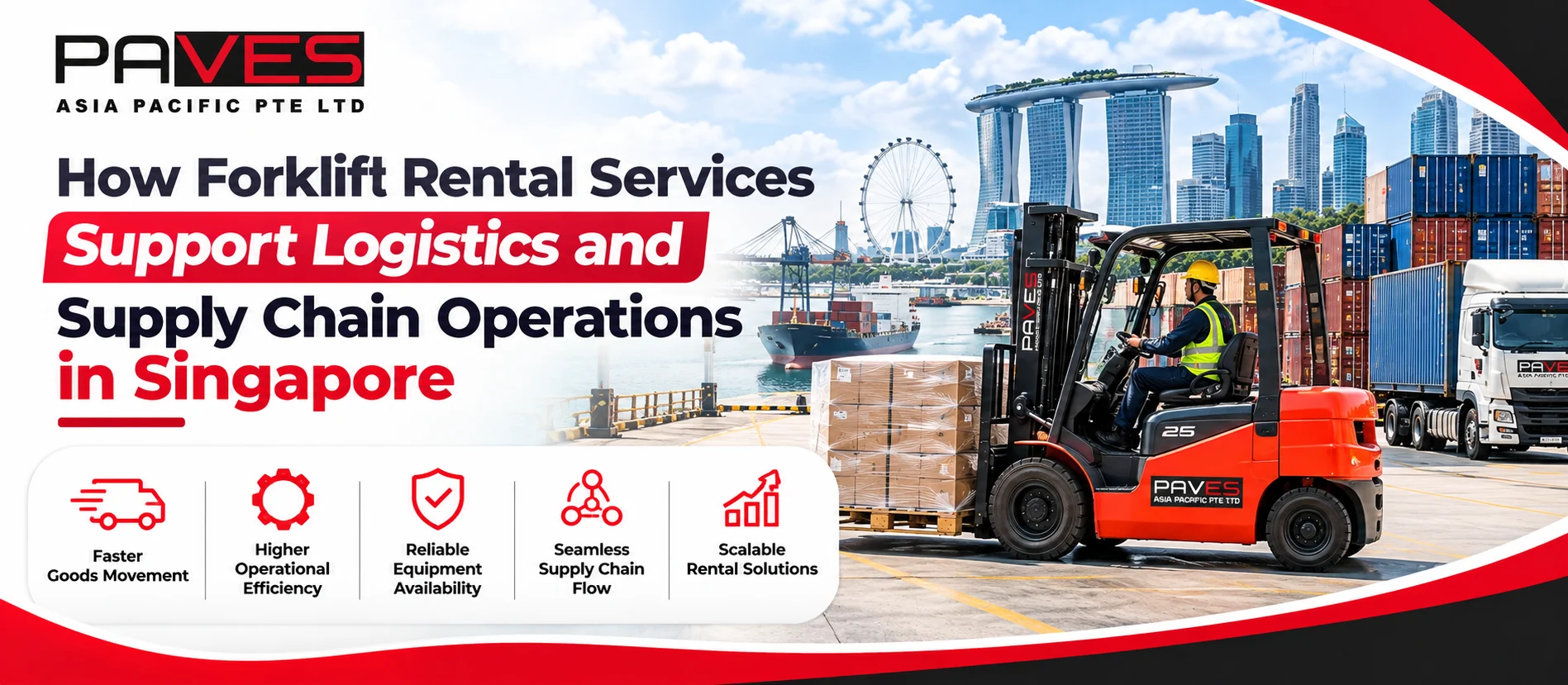
Efficient logistics and supply chain operations depend on the smooth movement, storage, and distribution of goods. From unloading shipping containers to transporting pallets across warehouses, businesses need reliable material-handling equipment to maintain productivity and meet delivery schedules. Forklifts play an important role in these activities, particularly in Singapore, where warehouses, manufacturing facilities, ports, and distribution centres support busy supply chains.
However, purchasing and maintaining an entire forklift fleet may not be practical for every business. Equipment requirements can change depending on shipment volumes, warehouse capacity, project schedules, and seasonal demand. Forklift Rental Services in Singapore provide businesses with a flexible way to access suitable equipment without making a large upfront investment.
By choosing appropriate rental arrangements, companies can manage operating costs, adjust equipment capacity, and support daily material-handling requirements across different supply chain activities.
How Do Forklift Rental Services Support Logistics Operations?
Forklift rental services help logistics and supply chain businesses access the material-handling equipment they need for warehouse and distribution activities.
Key benefits include:
- Efficient goods movement: Support loading, unloading, stacking, and pallet transportation.
- Flexible equipment capacity: Add forklifts when shipment volumes or workloads increase.
- Lower upfront investment: Avoid purchasing additional equipment for temporary requirements.
- Improved warehouse operations: Support inventory handling and storage activities.
- Project flexibility: Choose rental periods according to operational requirements.
- Equipment selection: Access different forklift types based on load capacity and working conditions.
These advantages make forklift rental a practical option for logistics companies, warehouses, manufacturers, freight operators, and distribution businesses.
Why Forklifts Are Important in Singapore’s Supply Chain Industry
Singapore is an important regional logistics and distribution hub. Businesses involved in international trade, manufacturing, retail, and e-commerce depend on efficient goods movement between ports, warehouses, distribution centres, and customers.
Forklifts help manage several essential material-handling tasks, including:
- Unloading goods from trucks and containers.
- Moving pallets between receiving and storage areas.
- Stacking products on warehouse racks.
- Transferring materials between production areas.
- Preparing goods for dispatch.
- Handling heavy or bulky industrial materials.
Without suitable material-handling equipment, businesses may experience slower operations, increased manual handling, and delays in order fulfilment.
Using Forklift solutions can help companies arrange equipment according to their facility requirements and workload.
1. Improve Loading and Unloading Efficiency
Loading and unloading are essential stages in logistics operations. Warehouses and distribution centres regularly receive shipments containing pallets, cartons, machinery, and industrial materials.
Forklifts help operators transfer these goods between delivery vehicles and designated storage or handling areas.
Rental forklifts can support:
- Faster movement of palletised goods.
- Efficient unloading of incoming shipments.
- Better organisation of loading bays.
- Reduced reliance on manual movement of heavy materials.
- Smoother coordination between receiving and dispatch teams.
Businesses handling high shipment volumes may need additional forklifts during busy periods. Renting suitable equipment can help them manage these requirements without permanently expanding their owned fleet.
2. Support Warehouse Storage and Inventory Management
Warehouse efficiency depends on how effectively goods are received, organised, stored, and retrieved. Forklifts help warehouse teams move products safely and position pallets in designated storage locations.
Different warehouse layouts require different forklift specifications. For example, narrow-aisle storage facilities may need equipment designed for restricted operating spaces, while larger distribution centres may require forklifts with higher load capacities.
Appropriate forklift selection can support:
- Efficient pallet stacking and retrieval.
- Better use of available storage space.
- Faster inventory transfers.
- Organised warehouse movement.
- Reduced handling delays.
Businesses should consider aisle width, rack height, floor conditions, load dimensions, and operating requirements before selecting rental equipment.
3. Manage Fluctuating Supply Chain Demand
Logistics workloads do not always remain consistent throughout the year. Retail sales periods, festive seasons, large import shipments, and special distribution contracts can increase warehouse activity.
During these periods, existing forklifts may not provide enough capacity to handle additional material movement.
Short-Term Forklift Rental in Singapore can help businesses manage temporary increases in equipment demand.
Common applications include:
- Seasonal warehouse operations.
- Temporary distribution projects.
- Large shipment handling.
- Inventory relocation.
- Warehouse expansion activities.
- Short-term manufacturing requirements.
Flexible rental arrangements allow companies to obtain additional equipment for an agreed period and return it when the workload decreases. This can help avoid maintaining an oversized fleet during quieter operating periods.
4. Choose Forklifts for Different Industrial Applications
Not all logistics operations require the same type of forklift. Equipment selection should depend on the materials being handled, the operating environment, and the facility layout.
When considering Industrial Forklift Rental in Singapore, businesses can evaluate several equipment categories.
Electric forklifts
Electric forklifts are commonly used in indoor warehouse environments. They are often selected for operations where lower direct emissions and quieter equipment are desirable.
Diesel forklifts
Diesel forklifts may be suitable for demanding outdoor applications and certain industrial environments. Businesses should assess ventilation, emissions, site rules, and operating conditions before selecting them.
LPG forklifts
LPG-powered forklifts can be considered for suitable indoor or outdoor applications, subject to ventilation and workplace safety requirements.
Reach trucks
Reach trucks are designed for specific warehouse applications involving high storage racks and narrow aisles.
Rough-terrain forklifts
These forklifts are designed for suitable outdoor environments where uneven ground conditions require specialised equipment.
Before renting, companies should verify load capacity, lifting height, turning radius, fuel or power requirements, and site compatibility.
5. Control Equipment Costs and Capital Investment
Purchasing forklifts requires a considerable financial commitment. Businesses must also account for maintenance, servicing, storage, insurance, and depreciation, depending on their ownership arrangements.
Rental services offer an alternative for companies that prefer to access equipment without purchasing it outright.
Potential financial advantages include:
- Lower initial capital expenditure.
- Rental costs aligned with the agreed usage period.
- Less investment in equipment used occasionally.
- Greater flexibility when operational requirements change.
- More capital available for other business activities.
However, rental is not automatically less expensive than ownership. Businesses should compare rental charges, delivery fees, maintenance responsibilities, contract terms, and expected usage before making a decision.
6. Maintain Operational Continuity and Reduce Downtime
Equipment downtime can affect the movement of goods throughout a supply chain. If a forklift becomes unavailable, warehouse teams may struggle to unload deliveries, retrieve inventory, or prepare orders for dispatch.
A suitable rental arrangement can provide additional equipment capacity or an alternative forklift when operational needs change.
Before signing an agreement, businesses should check:
- Whether routine maintenance is included.
- Who is responsible for repair expenses.
- How equipment breakdowns are reported.
- Whether replacement equipment is available.
- Expected service response times.
- Inspection and servicing arrangements.
These details help businesses understand the support available during the rental period and plan for potential disruptions.
7. Improve Material Handling Across Distribution Centres
Distribution centres coordinate the movement of goods from suppliers to retailers, business customers, and other delivery destinations. Forklifts help move products between receiving, storage, sorting, staging, and dispatch areas.
A well-planned forklift fleet can support different stages of this process.
For example, one forklift may handle incoming pallets, another may move products into storage, and additional equipment may prepare orders for dispatch.
This division of work can help:
- Reduce unnecessary equipment movement.
- Improve coordination between warehouse teams.
- Support timely order preparation.
- Manage higher volumes of palletised goods.
- Maintain smoother material-handling workflows.
Businesses should also establish clear traffic routes, designated pedestrian areas, and safe operating procedures within their facilities.
8. Select the Right Forklift Rental Partner
Choosing a rental provider involves more than comparing the advertised rental price. Businesses should evaluate equipment availability, condition, technical specifications, service support, and contract flexibility.
When comparing Forklift Hire Services in Singapore, consider the following factors:
- Equipment range: Check whether the provider offers forklifts suitable for your load requirements and working environment.
- Rental duration: Confirm short-term and longer-term rental options.
- Equipment condition: Ask about inspection, servicing, and maintenance history.
- Service support: Understand breakdown procedures and repair responsibilities.
- Delivery arrangements: Confirm transportation, collection, and scheduling details.
- Pricing transparency: Review rental charges and any additional fees.
- Contract conditions: Check extension, cancellation, and replacement terms.
A suitable Forklift Rental Company Singapore businesses select should understand their operational requirements and communicate rental conditions clearly.
Paves Asia Pacific Pte Ltd can be considered when businesses are evaluating forklift rental options for warehouse, industrial, and logistics requirements. Companies should discuss their operating environment, expected workload, and equipment specifications before confirming a rental arrangement.
How to Choose the Right Forklift Rental Plan
The most suitable rental plan depends on how frequently the equipment will be used and how long it is required.
| Business requirement | Rental option to consider |
|---|---|
| Temporary shipment handling | Short-term rental |
| Seasonal warehouse demand | Flexible-duration rental |
| Ongoing distribution operations | Longer-term rental |
| Special industrial project | Project-based rental |
| Additional capacity during expansion | Flexible rental arrangement |
Before finalising a plan, estimate daily operating hours, load requirements, expected rental duration, and the number of forklifts needed. This helps businesses select equipment that supports productivity without unnecessary expenditure.
Conclusion
Forklifts are essential to many logistics and supply chain operations, supporting the movement, storage, and distribution of goods across Singapore. From loading and unloading shipments to managing warehouse inventory and preparing customer orders, suitable material-handling equipment helps businesses maintain efficient workflows.
Forklift rental provides a flexible alternative to purchasing additional machinery, particularly when equipment requirements change with shipment volumes, seasonal demand, or project schedules. By evaluating forklift specifications, rental duration, maintenance arrangements, and service support, businesses can make informed equipment decisions.
Working with an experienced rental provider such as Paves Asia Pacific Pte Ltd can help businesses assess their material-handling requirements and identify suitable rental arrangements for their operations.