
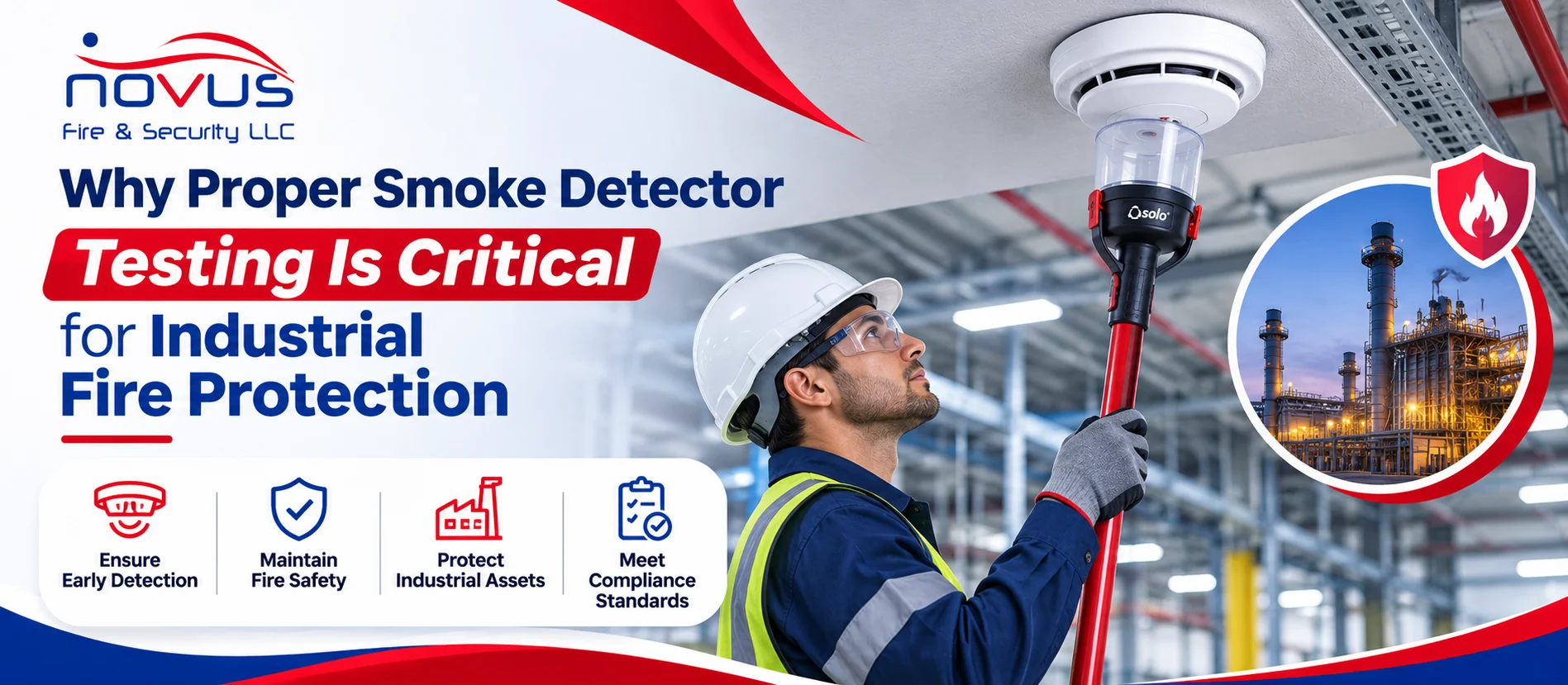
Industrial facilities often contain machinery, electrical systems, production equipment, combustible materials, storage areas, and other potential fire hazards. In these environments, an effective fire detection system is essential for identifying smoke and providing an early warning that allows people to respond appropriately.
However, installing smoke detectors is only one part of industrial fire protection. Detectors must also be inspected and tested according to manufacturer instructions and applicable fire safety requirements. Without proper testing and maintenance, faults, contamination, damage, or other issues may go unnoticed.
Professional smoke detector testing helps confirm that compatible detectors respond appropriately under specified test conditions. Using suitable testing equipment, approved test aerosols, and compatible accessories also helps inspection teams carry out their work consistently.
For industrial maintenance teams and fire safety contractors, a reliable Solo Smoke Detectors Tester and the correct testing accessories can support organised inspection procedures. Understanding why testing matters, how it should be performed, and which equipment is appropriate can help facilities maintain a dependable fire detection system.
Why Is Proper Smoke Detector Testing Important in Industrial Facilities?
Proper smoke detector testing is important because it helps verify that installed detectors respond correctly to an approved test stimulus and that potential faults are identified for investigation.
Regular testing can help industrial facilities:
- Identify detectors that may not respond as expected.
- Detect contamination, damage, or maintenance issues.
- Verify the operation of compatible detection devices.
- Support planned fire safety maintenance programmes.
- Maintain inspection records and equipment history.
- Identify issues requiring repair or replacement.
- Improve confidence in the overall fire detection system.
Testing should follow the detector manufacturer’s instructions, the applicable fire safety standards, and the site’s approved fire protection procedures. A successful functional test does not replace other required inspections or prove that the entire fire alarm system is fault-free.
Why Industrial Facilities Need Reliable Smoke Detection Systems
Industrial buildings can have complex layouts, high ceilings, enclosed production areas, warehouses, electrical rooms, and locations where smoke may spread differently from a typical office environment.
Different activities also introduce different fire risks. Manufacturing processes may involve heat-producing equipment, electrical installations, packaging materials, fuels, or combustible dust. Warehouses may contain large quantities of stored goods, while industrial kitchens and plant rooms may have specific environmental conditions.
A suitable fire detection system helps identify smoke at an appropriate stage and communicate an alarm through the connected fire alarm system.
However, the performance of a detection system depends on several factors:
- Correct detector selection and placement.
- Suitable installation and configuration.
- Regular inspection and functional testing.
- Timely maintenance and fault correction.
- Appropriate staff training and emergency procedures.
Smoke detector testing is therefore an important part of a wider fire protection programme rather than an isolated maintenance activity.
7 Reasons Proper Smoke Detector Testing Is Critical for Industrial Fire Protection
1. Helps Identify Detector Faults Early
Smoke detectors may develop problems due to age, contamination, physical damage, electrical issues, or environmental conditions. Some problems may not be obvious during a visual inspection.
Functional testing helps verify whether a compatible detector responds to the specified test stimulus. If a detector does not respond as expected, the maintenance team can investigate the cause and arrange the required corrective action.
Testing records also help identify recurring problems. For example, repeated contamination in a particular production area may indicate that the detector requires more frequent attention or that its location needs to be reviewed by a qualified fire protection professional.
Identifying problems during planned maintenance is preferable to discovering them during an emergency.
2. Supports Early Fire Detection and Emergency Response
Early detection is particularly important in industrial facilities because fires can affect machinery, stored materials, production operations, and building infrastructure.
A properly maintained detection system can provide an early warning when smoke is detected, allowing occupants to follow the site’s emergency response procedures.
Smoke detector testing helps verify the response of individual detectors under the prescribed test conditions. It should also be coordinated with appropriate fire alarm system testing so that associated functions, such as alarm signalling and notification devices, are checked according to the required procedure.
Testing a detector alone does not confirm that every component of the complete fire alarm system is operating correctly.
3. Helps Maintain Compliance With Fire Safety Requirements
Industrial facilities must follow applicable fire safety regulations, codes, standards, and inspection requirements. These requirements may differ according to the building’s location, occupancy, industry, and fire protection system.
Planned testing and maintenance help organisations demonstrate that their fire detection equipment is being managed responsibly.
Facility managers should maintain records showing:
- Detector identification and location.
- Inspection and testing dates.
- Testing procedures followed.
- Equipment used during inspections.
- Test results and identified faults.
- Corrective actions and follow-up checks.
- Details of the responsible personnel.
Always consult the applicable local regulations, relevant standards, and manufacturer documentation. Testing intervals should not be selected solely for convenience.
4. Improves Inspection Consistency With Suitable Testing Equipment
Industrial facilities may have hundreds of detectors installed across different floors, departments, and operating environments. Using appropriate equipment helps maintenance teams follow a consistent procedure.
A Solo Smoke Detector TestingKit may include compatible test cups, extension poles, adapters, and other components designed for specific testing applications.
Before using a kit, inspectors should verify that its components are compatible with the detector models installed at the site. A physically fitting accessory is not automatically approved for every detector.
A standardised equipment arrangement can help inspection teams prepare for scheduled testing, reduce avoidable equipment problems, and maintain better inspection records.
5. Supports Appropriate Testing of Different Detector Types
Industrial buildings may contain different types of smoke detectors, each with its own testing requirements. Optical and photoelectric detectors, for example, may have different designs and manufacturer-specific testing instructions.
The testing method must be suitable for the device being inspected. Using an incorrect test material or procedure may produce unreliable results or affect the detector.
A Solo Smoke Detector Test Spray should only be used when it is suitable for the detector and approved testing method. Inspectors should review the product instructions, application requirements, and detector manufacturer’s guidance before use.
Where different detector models are installed, maintain a compatibility list to help technicians select the correct testing accessories for each device.
6. Helps Reduce Avoidable Maintenance Problems
Incorrect testing methods, unsuitable accessories, and excessive application of testing materials may create unnecessary maintenance work.
For example, using an unapproved aerosol or applying more test material than specified may cause contamination or unwanted alarm activation. Similarly, incompatible test cups or poorly maintained equipment can make inspections difficult.
A professional inspection procedure should include equipment checks, suitable testing materials, correct application, and post-test verification.
Novus Fire and Security LLC supports fire safety professionals in identifying suitable testing equipment and accessories for their inspection requirements.
7. Helps Maintain Inspection Records and Long-Term System Reliability
Testing is more useful when the results are recorded and reviewed. An inspection history can help maintenance teams understand the condition of the detection system and identify devices that require additional attention.
Records can also support maintenance planning and help organisations track outstanding faults.
A useful testing record should include the detector location, identification number, test date, result, any fault identified, and the corrective action taken.
Reviewing these records can reveal patterns such as repeated detector faults, environmental contamination, or equipment problems. These findings may help facility managers plan maintenance activities and consult qualified professionals about necessary system improvements.
How to Choose the Right Smoke Detector Testing Equipment for Industrial Use
Selecting suitable equipment begins with understanding the detectors installed at the facility.
Consider these factors before purchasing:
- Detector compatibility: Confirm the manufacturer, model, and approved testing procedure.
- Testing material: Select an approved smoke test aerosol where required.
- Test cups and adapters: Verify that fittings are compatible with both the detector and testing tool.
- Extension poles: Consider ceiling height, working reach, and safe handling.
- Equipment durability: Review construction quality and suitability for repeated professional use.
- Maintenance requirements: Check cleaning, storage, inspection, and replacement instructions.
Professional Smoke Detector Testing Accessories should be selected according to the actual equipment and inspection requirements rather than purchasing a general-purpose kit without checking compatibility.
Building a Professional Smoke Detector Testing Kit
A practical solo smoke detector tester equipment setup may include a compatible tester, approved test cups, suitable extension poles, adapters, and the required test aerosol.
The exact configuration depends on the detector models and testing methods used at the facility. Some sites may require multiple accessories because they have different detector manufacturers or installation arrangements.
Before purchasing, prepare a list of installed detector models and ask the equipment supplier to confirm compatibility. Also check whether consumables, replacement parts, and storage arrangements are available.
A well-planned equipment selection process helps avoid unnecessary purchases and makes scheduled inspections easier to organise.
Best Practices for Industrial Smoke Detector Testing
Industrial testing should be carried out by trained and authorised personnel following the site’s approved procedures.
Important practices include:
- Review detector documentation and the applicable testing requirements.
- Inform relevant personnel before carrying out tests that may activate alarms.
- Follow the site’s procedures for managing alarm signals and monitoring arrangements.
- Inspect the detector and testing equipment before use.
- Apply only approved test materials using the specified method.
- Verify the detector’s response and reset it according to instructions.
- Record results and arrange corrective action for failed tests.
- Confirm that the fire protection system has been returned to its normal operating condition.
Never leave detectors or fire alarm zones isolated after testing. Follow the site’s reinstatement and verification procedure.
Conclusion
Proper smoke detector testing is an essential part of industrial fire protection. It helps maintenance teams identify detector faults, verify functional response, maintain inspection records, and support the reliability of fire detection systems.
Choosing suitable testing equipment is equally important. Compatible test cups, approved aerosols, extension poles, and other accessories help professionals follow the correct testing procedures for the installed detectors.
Industrial facilities should combine scheduled inspections, trained personnel, manufacturer guidance, and accurate maintenance records to manage their fire detection systems effectively. Novus Fire and Security LLC recommends selecting professional testing equipment based on detector compatibility, site requirements, and applicable inspection procedures.
Frequently Asked Questions
Q1. Why is smoke detector testing important in industrial facilities?
It helps verify that compatible detectors respond correctly under specified test conditions, identify faults, support maintenance planning, and maintain inspection records.
Q2. What equipment is needed for professional smoke detector testing?
Depending on the detector and testing procedure, equipment may include a compatible tester, test cup, approved smoke test aerosol, extension pole, adapters, and suitable maintenance accessories.
Q3. Can any smoke detector test spray be used for industrial inspections?
No. The test aerosol must be suitable for the detector and approved testing method. Always follow the detector manufacturer’s instructions and the aerosol product guidance.
Q4. How often should industrial smoke detectors be tested?
Testing frequency depends on applicable regulations, relevant standards, manufacturer recommendations, and the site’s fire safety maintenance programme. Follow the requirements that apply to the facility.
Q5. Does testing one smoke detector confirm that the entire fire alarm system is working?
No. Testing an individual detector checks its response under the specified conditions. The complete fire alarm system requires its own inspection and testing procedures, including relevant control, signalling, and notification functions